Honestly i feel this to be an important question to ask. As everything as it comes to life is meant to evolve and pursue survival into a state of may we say complex emotional and behavioral intelligence is it that science will get us there or is religious and philosophical concepts important to driving that? The reason i ask this is because on the philosophical and religious side society pushes its desire to know the unknown or what i would call the whole of reality but so does science both use tools devised by humans and yet come to completely different conclusions and infact the other side has come to a conclusion that is even harmful to society! But both groups have the same desire. Heres a thought why is it that when you look at cases of dmt use each person describes the hallucinations very similarly? Yet some will say they met “god” but others will just say “that was cool bro”? Maybe thats vague but my point is perception is terrifying and where the wise man swims the blind man drowns.
No, just survive and breed, theres no goal towards complex emotions or behavioural intelligence.
Trees and plants literally have no brains and are more numerous than humans.
Stuff like bacteria does fine without understanding emotions.
This is as far as evolution is understood now, there are far out there theories ive seen thrown around on podcasts about what if there is a goal towards intelligence and itll be created when we make some kind of perfect ai, but as far as commonly understood biology goes, theres no goal towards anything outside of survival and breeding when it comes to what drives evolution.
Science tells us how to build nuclear weapons, but doesn’t tell us whether we SHOULD or whether or how or when we should deploy them. For that you need philosophy. IMO religion is just a weak, lazy subcategory of philosophy that lacks curiosity and rigor and substitutes dogma for actual effort or moral struggle.
Philosophy certainly isn’t perfect nor nearly as effective in practical terms as science, and in modern times it is thought by many to be in crisis for various reasons. But I still think it is a worthy and necessary vehicle for thinking about thinking, so to speak.
With or without philosophy, though, humans need to learn to sit with uncertainty, to admit what they don’t or can’t (at least presently) know or even have good hypotheses about – and they need to refrain from making up stuff to relieve that perceived tension.
On another forum a mother was relating how, when one of her children were young, she was distraught about a seriously bad medical diagnosis (thankfully, ultimately a cure was obtained). But at the time she was agonizing about why this was happening to her child – as mothers will do.
But a wise nurse helped her enormously by saying that there IS no reason for your child going through this, other than biology. That stuck with her ever after, and the story resonated with me as well.
A couple of years ago my wife was misdiagnosed with stage 4 ovarian cancer. When they opened her up and removed the fetus-sized tumor in her abdomen, along with her other lady parts, standard procedure is to put it under the microscope on the spot to asses exactly what it is. The verdict was that it was a rare benign mimic and not cancerous at all – just indistinguishable from ovarian cancer from the standpoint of either radiology or visual inspection. The odds of this were a mere 3%, but she won the lottery, and she woke up in recovery to an excited nurse shouting into her face, IT’S NOT CANCER!!! Something said nurse doesn’t get to do, 97% of the time.
But for almost a month, while we waited for the emergency surgery slot, my wife sat under an effective death sentence, with the only variables to be determined being how long she had, and what (shitty) options she had for treatment, and how to thread the needle between how she wanted her final days to go down and the needs of others (her disabled son, in particular).
My wife, and everyone who knew her, found out who she was. She was not afraid. She slept fine. She did not rail against it. It was just biology happening. It wasn’t personal or directed. She was not thrilled at the diagnosis or the quality of life it would likely leave her with in her final days, but she was not bemoaning it, either. She had the courage, dignity and peace of mind to face it. She joined online cancer victim communities and started learning all the 3-letter acronyms (TLAs) for her illness, the ins and outs, the experimental treatment options, etc. For our anniversary she made me a hand made card titled, “Are you ready to IMPROVISE?”
All this was possible because she was willing to accept that there was NOT a “reason” for this. It was just stuff happening – unfortunately, some stuff that happens isn’t fun. But it’s not personal.
Many (or most) of them. Surely cats and dogs, no doubt about that. No animals would follow stupid ideals divorced from reality.
No idea. Let me know if you find out. We can’t even see past the edge of the observable universe which is why its called the observable universe. The light from further out hasn’t reached us yet (and maybe never will since space-time is expanding between here and there faster than the speed of light). We could just be a single bubble of expansion from a singularity among infinite singularities. We might be inside a black hole. Reality might be a hologram inside a video game but I find that last one a bit silly. Video games are just pixels.
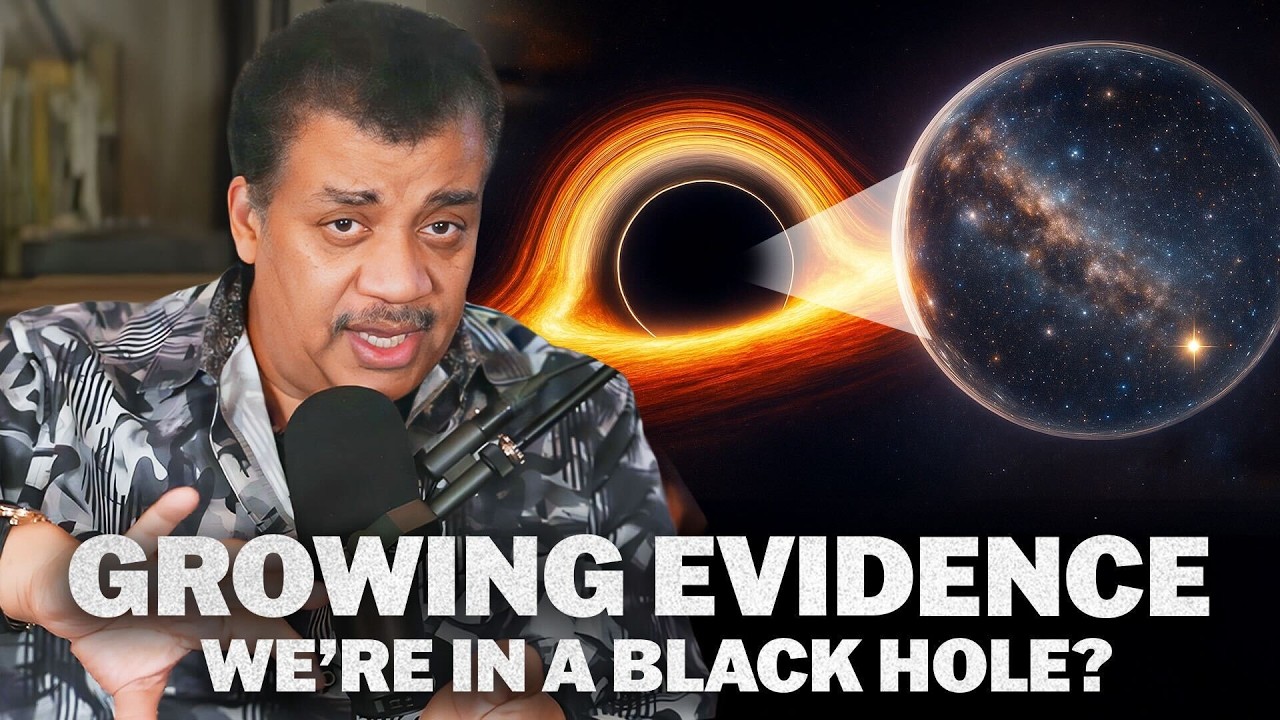
Obvious observations are Obvious. I’d like to add that just posting a video on Neil Degrasse Tyson (which I’ve already seen) isn’t evidence for you’re rebuttal infact its just a video of a couple people talking about science. I’m not willing to change my opinions without proper evidence and just because a scientist said so isn’t evidence.
Your questions strongly remind me of what they talk about in The Matrix. Is that where you’re getting your inspiration from?
I feel like you’re attempting to elitist a negative response by rage baiting and not contributing anything constructive to any of these post threads. These are threads that are just attempts to provoke new ways of thinking and to address dangerous ways of thinking. To answer your question simply, no this is not inspired by a fictional movie that the muskrat seems to believe in (elon) in fact this is a base conversation of what T.O.E “theory of everything” would look like and how would we grasp that as say an individual while avoiding false ideologies and dangerous lines of thinking. If you’re not willing to contribute to that sort of conversation please move on to harassing someone else.
He actually is contributing. It seems you just don’t care for the content of that contribution.
Additionally, he is not harassing you. He simply stated what he thought and followed it up with a question.
@Matthew, in this debate forum, ideas are not sacrosanct. They can be challenged, supported, or disparaged by anyone. You are not required to respond to anyone’s posts, but they are free to post (as long as forum guidelines are adhered to).
So…if you don’t agree or like what a poster has to say, walk on by. Know, though, that they do not have to cease posting in the thread.
But if the scientist is going off of already existing evidence, doesn’t that count?
Fair enough on your answer as to what inspired you. But why be defensive and accuse me of harassment? 
I disagree, as the one sacrosanct idea (on this forum) is that there are no sacrosanct ideas.

While “The Matrix” is a bit of a stretch, I think the idea is valid - the certainty of reality cannot be validated.
Science can only operate within our perception of reality, and the consistency of reality only applies within that perception.
In terms of absolute certainty, we can only be certain of one thing (and in terms of there being no sacrosanct ideas, I would say this is the exception):
There is existence.
This is a singular fact for which we have absolute certainty - it cannot be questioned, cannot be disputed, cannot be invalidated, etc., because any attempts to do so merely serve to support the very claim itself.
Beyond that, nothing can be absolutely certain. Reality cannot be anything more than perception.
We can consider three possibilities that would challenge our perception of reality:
- Advanced technology
- Supernatural
- Simulated reality
With advanced technology, everything we think we know could be the product of a “controlled environment”
With the supernatural, all bets are off
With a simulated reality, the certainty of the past is even in question. A simulation could have begun mere seconds ago, and everyone has preset memories of an existence prior to that initial moment.
The “grasp of reality” can only ever be subjective, filtered through our individual perceptions. The consistency of reality is just a perception of consistency.
It has always struck me as an unfalsifiable concept, so I am not sure what you mean here by “it is a valid idea”? If someone asks me if our reality is an illusion, then my response is the same as to any other claim, what objective evidence can they demonstrate to support the idea, if there’s none, or insufficient then I remain disbelieving. If the idea is unfalsifiable then I must also be agnostic, this of course would also be my response to the negation of any unfalsifiable claim.
That our perception can and does differ from reality is not evidence that something exists beyond reality, or what is objectively true, science can and has helped us understand things that were beyond our perception without that method(s).
Whilst I accept the premise that things exist, because it can be demonstrated in a sufficiently objective way, it cannot be an absolute certainty, as you just demonstrated with an unfalsifiable concept above, also absolute certainty seems to describe a closed mind.
Science for example insists that all ideas, even objective scientific facts, remain tentative in the light of new evidence. It is religions that cling doggedly to beliefs that have long been falsified or remain unsupported by any objective evidence.
Just because all ideas are subjective, does not mean they are all equally subjective.
The shape of the earth is not subjective in the same way your favourite colour is. How reliable our perception of reality is, depends on how much subjective bias we remove, which is what science is designed to do, remove as much subjective bias as possible.
it’s unfalsifiable, yes, but that doesn’t invalidate the possibility - it still remains valid, even though it can’t be disproved.
It’s fine to be disbelieving, but the problem is, the same applies to all possible realities. There is no objective evidence to support the idea that reality is real either - on the basis that any evidence would be from within the reality itself, so is not therefore objective or counted as evidence.
Of course, that doesn’t mean that we should reject reality outright - it is entirely reasonable to operate on the assumption that reality as we know it is real and not an illusion, but we cannot escape the fact that our acceptance of reality is also a belief, unsupportable and largely unfalsifiable, for what it’s worth.
What I meant here is that science and reality itself are filtered through our perception.We have no means to interface with reality outside of our perception to validate our perception.
I am not seeking to claim that this point in any way evidences there being something existing beyond reality, etc. - the point is only that we are dependent on our perception and have no way to externally validate it.
it can be an absolute certainty that there is existence in a general sense. If one seeks to get into any specifics about that existence, then no, there cannot be absolute certainty. But on the point of the absolute: existence or no existence, there must be absolute certainty that there is existence. The very question would be incompatible with no existence (i.e., absolute nothingness)
Existence is technically falsifiable: if there is absolutely nothing, then existence isn’t possible, nothing is possible, nothing exists.
True, in part. It is reasonable to recognise differences in subjectivity, but when it comes to perception, we have no means to determine reliability because we have no alternative with which to measure it.
In terms of subjective bias, perception is 100% subjective bias. That cannot be reduced. We are entirely, completely, unavoidably dependent on our individual perceptions.
Bear in mind though that this is just thoughts on absolute certainty - I am not in any way saying that we shouldn’t accept our perception or reality, etc. - it’s just being aware of the limits of what we can know, what can be evidenced and even what evidence actually means.
You can’t demonstrate something is possible, when you admit its possibility is unknowable. That’s a contradiction.
Possible is the default state unless proved otherwise.
Possible and impossible are absolutes. There is no range between them. Something is either possible or impossible.
Possible has to be the default state, as it has to be one or the other, and you can’t default to something being impossible without proof, because “impossible” is a conclusion, whereas “possible” is subject to change - something initially considered possible can be determined “impossible” with further evidence. The only way something “impossible” can be determined “possible” is through the acknowledgement of an error in the initial categorisation.
If something is unfalsifiable, then by definition, it cannot be proved impossible, so it must be considered possible. If it could possibly not be possible, then that would make it falsifiable.
Of course, because ‘possible’ is the default state, it is the weaker of the two terms. The argument here is only that something is possible. As the weaker state, that acknowledgement doesn’t lend any credibility to the idea beyond the mere fact that it has not been determined to be impossible, either by evidence or logic.