These are not always qualifications required for something ro be called a god as the Greek mythology shows us not every god is equal in this regard they have weaknesses and are burdened by their position, bound to it even. There are all kinds of gods that don’t fit the Christian format and my offer is that maybe god doesn’t have to fit these criteria as they are socially constructed by humans for humans. Its been awhile pleasure speaking with you again Sheldon.
Then what of Greek mythology? Each god represents a different aspect of nature to explain how and why things work and not all gods are intelligent infact they’re quite dumb at times even showing a lack of ability to have remorse or empathy. You might argue this is different because its a mythology vs Christian theology but it shows that gods aren’t always omnipotent nor do they have to be to fit religious world views.
The Greek and Roman pantheons seemed to be little more than immortal men with some special powers tacked on, it’s true. They lived on a mythical mountain and only appeared to mortals when it suited them, though. For most people most of the time they were invisible and intangible and their influence was simply alleged, and this seems to be the most consistent property of any deity in human imagination.
1 Like
Returning to the original topic, my main malfunction with god-as-the-universe or god-as-consciousness is that “universe’“ and “consciousness” are perfectly suitable words we already have for those things and layering gods on top of it (usually in ways that are practically, if not actually, unfalsifiable) is just playing into the human desire / need for things like awe – which we already can have for those things without involving gods. It’s also needlessly “multiplying entities” with no actual explanatory power.
Ineffability is another quality of most gods, at least much of the time. Gods have that je ne sais quoi aspect to them that also provides a sense of mystery. Recently, I’ve been reading about Taoism and man the word salad of Taoist urtexts puts even the Bible to shame. The Tao is for all practical intents and purposes just a placeholder for “everything we don’t quite grasp or understand”. It’s elusiveness is a feature rather than a bug, unlike Christianity where if you’re pious or devout enough maybe god will reveal himself to you. If you had a revelation of that Tao, it definitionally would no longer BE the Tao. No wonder the whole religion (or at least the dominant “water tradition”) is all about just letting things be as they are, with all actions being minimalist, even moreso than Buddhism. It’s also tied to the natural world and an observational understanding of nature, however ill-framed and personalized it might be.
I guess what it boils down to is that human religious ideation is full of endless variations but the core feature is an attempt to by turns explain and/or cope with the unknown. The older I get, the more I prefer to just accept that I can’t and won’t know everything rather than fight it. I no longer have the energy for that even if I still cared.
Oh well, if you’re talking about immensely powerful, but localised beings with god-like powers, there are plenty of those that have sprung from human imagination. And you don’t have to go back to ancient times. You can recognise them easily.
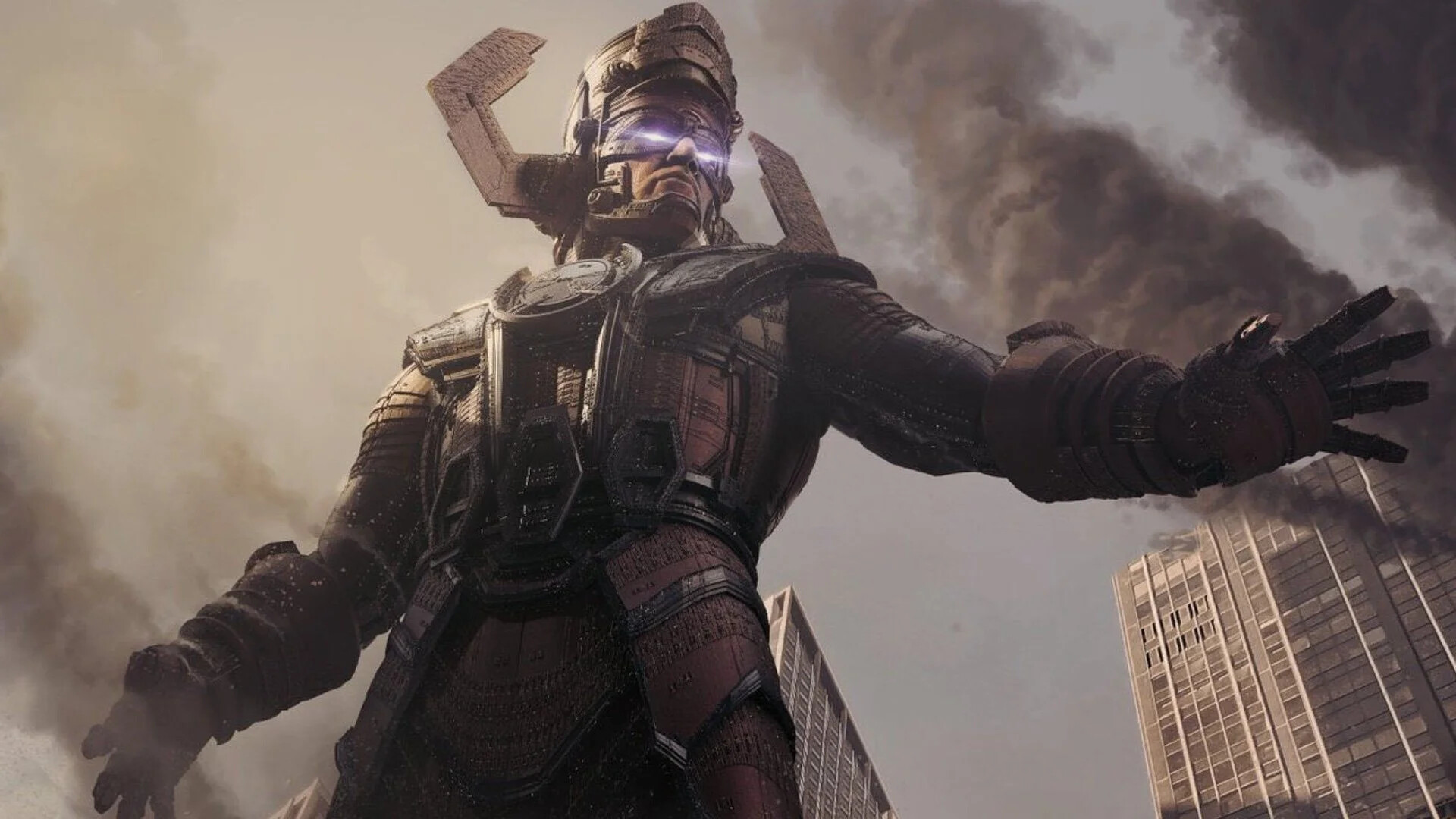

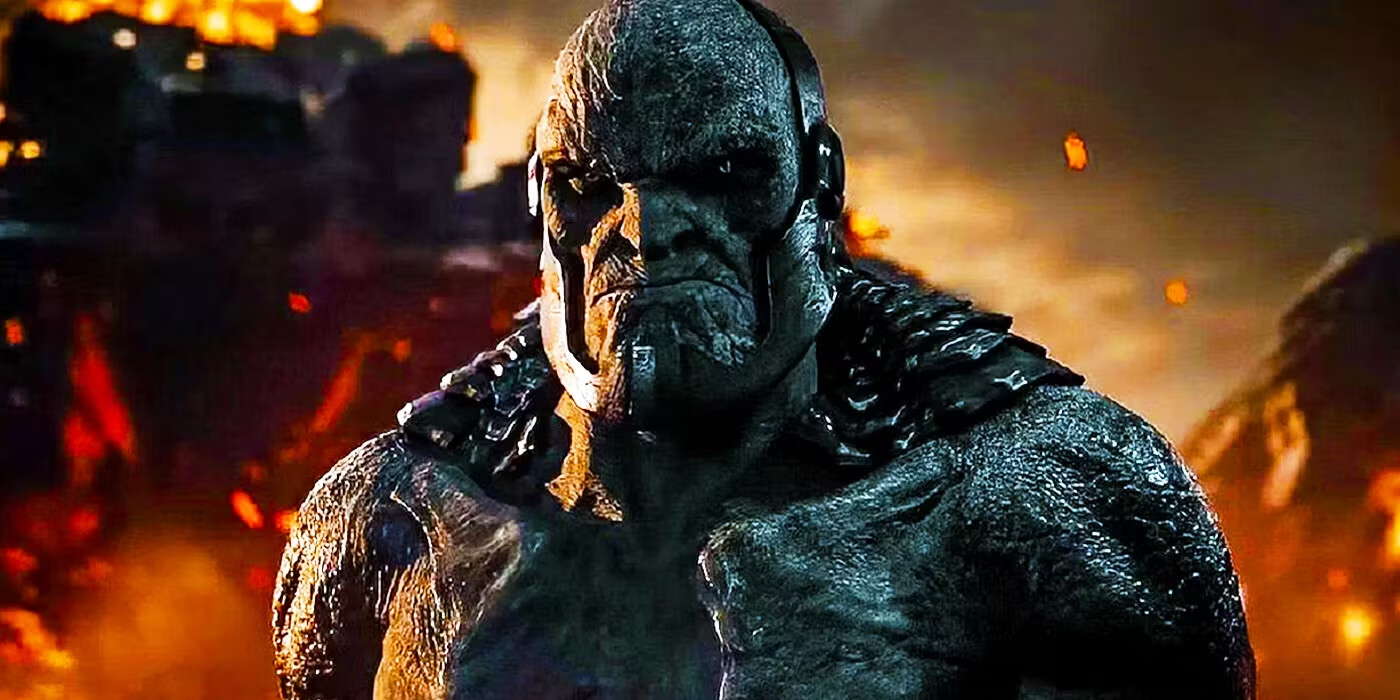

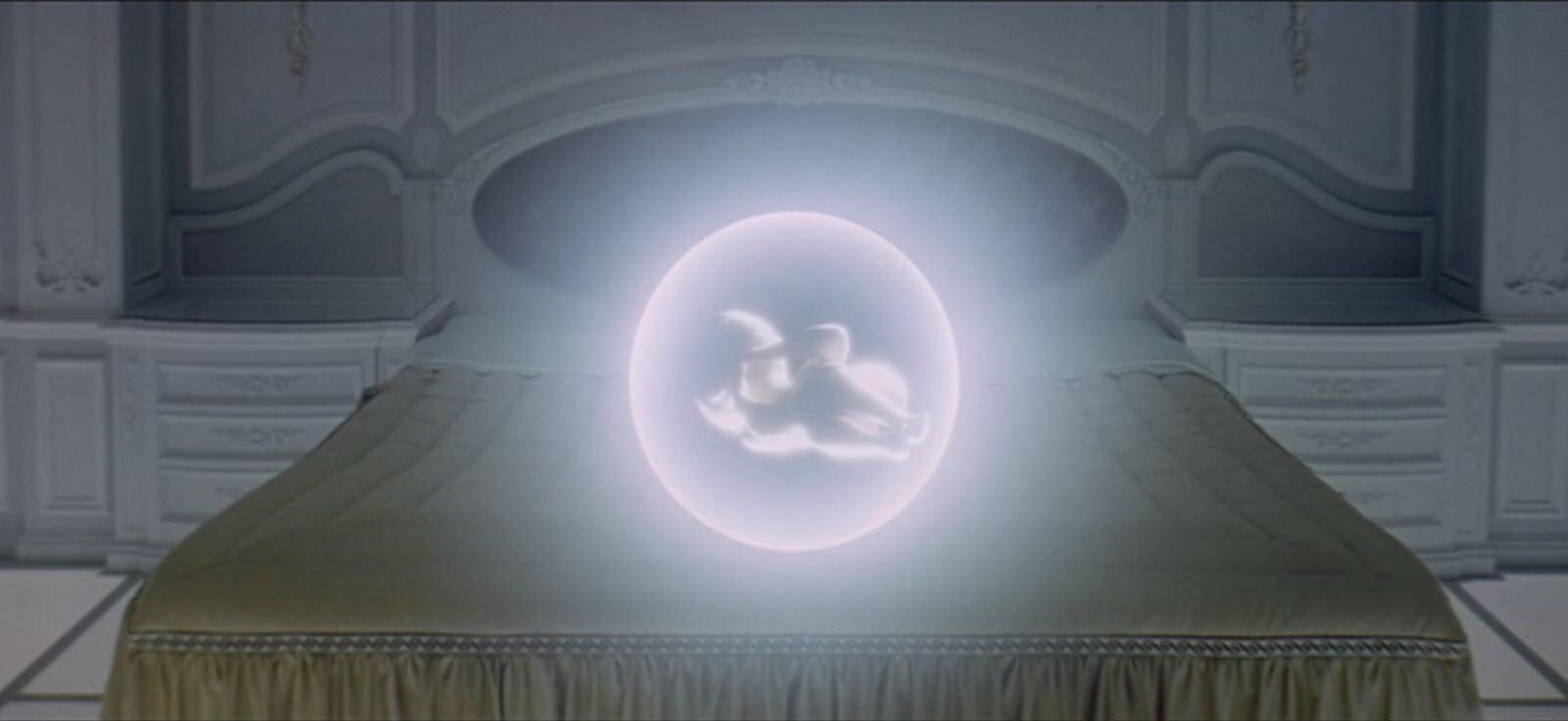
You can mount a convincing argument that those aren’t meaningfully gods. They have enormous power but it is still not infinite and certainly not benevolent.
The Q for example are supposed to be a race of beings so advanced that they can manipulate spacetime to a great extent but that’s just “powerful alien with superior technology” taken to its extreme. The “star child” is just a reborn man of uncertain but certainly superior capability.
This is an observable “god” provided “god” is in scare quotes but none of these characters are going to give us blissful eternal life or paradise or ultimate wisdom that most god-botherers seem to be after… some are going to toy with or harm us. Just absolute assholes with absolute power. Probably what you are I would devolve into if we had unlimited power.
I take your points and understand them, mordant.
But I was responding to Matthew. Sorry if I didn’t make that clear. By invoking the Greek gods he introduced the idea of immensely powerful, but localised beings with god-like powers. Even Zeus, the most powerful figure of the Greek pantheon wasn’t infinite in power, knowledge or extent. And he often wasn’t particularly benevolent.
That was my justification for posting the images of the observable and physical “gods” Galactus, Q, Darkseid, Trelane and the Starchild. They fit the bill of what he introduced to this thread 14 and 15 hours ago.
Thank you,
Walter.
I was just riffing on the topic … not arguing with you (or Matthew) but with the concept. I just never found the idea of beings with god-like powers to be appealing or a serious alternative to the more typical tri-omni deity. Probably a good thing I wasn’t born into the societies where those kinds of gods were worshipped. Although one virtue they’d have is that they don’t claim to be all benevolent or all knowing, so it would be harder to be deflated when they proved to be malevolent or ignorant in some regard or other.
Thanks for naming them by the way. I had never seen Galactus or Darkseid. My guess is those were, like Trelane (and Q, at least in his early iterations), concocted as villianous foils for various fictional heroes as much as anything. Never did quite figure out what Star Child meant for relations between earth and the alien watchers. Nor did I see the sequel to 2001 to see if that concept was fleshed out.
Can fill you in on some details if you’d like mordant.
So long as that’s not dragging the thread off topic.
If it is, then contact me privately for the info.
Thanks,
Walter,
Nah, that’s okay but thanks. Now that I have the names, Google is my friend.
I can see why I hadn’t heard of them, I never got immersed in the comic book universe apart from a handful of movie adaptations perhaps. But back in the day I watched every episode of the original Star Trek, and saw 2001: A Space Odyssey (and read the book) so those all “landed” for me. Sci Fi was something I was allowed to escape into mainly because my parents were ignorant and incurious about it. Star Trek’s idealism in particular appealed to me at the time. Good memories.
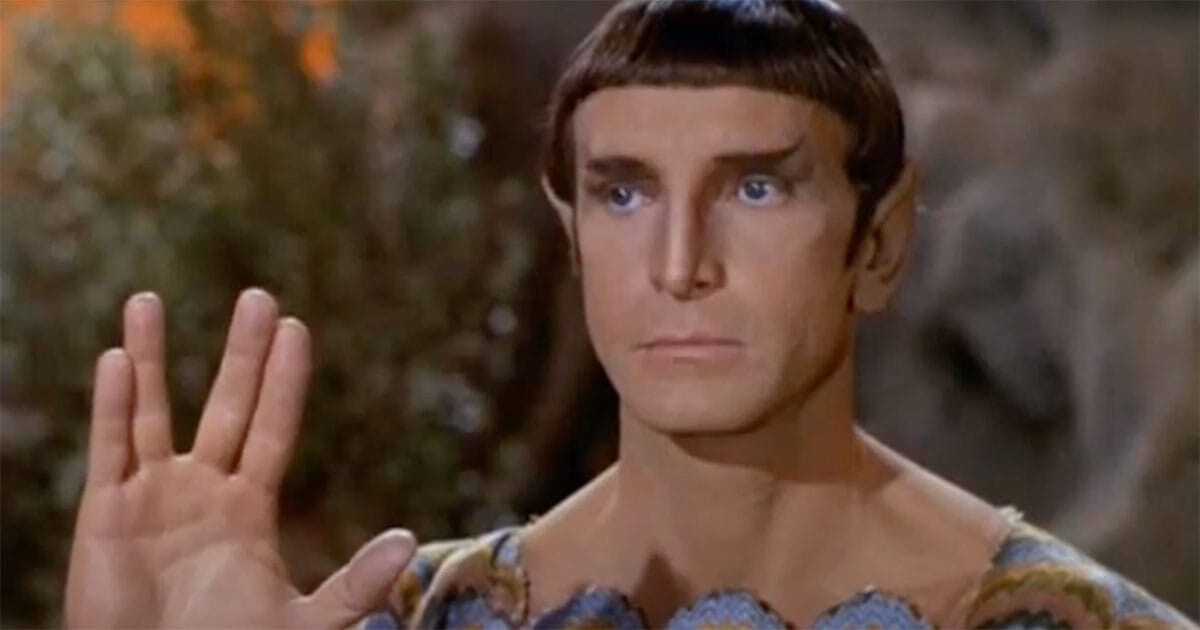
The first Star Trek with William Shatner and Leonard Nimoy was a shining jewel. I didn’t care for the rest of the franchise. I also liked Nimoy in Fringe. One of the last shows he played in before he passed away.
We’re peas in a pod, MrDawn.
Perhaps its because we were kids when the original Trek was being screened?
Anyway, there’s a nice nod to the original series in the Strange New Worlds incarnation of Trek. In ‘The Quality of Mercy’ episode of series 1 the crew of the Enterprise under Captain Pike get their first look at what a Romulan looks like when they tap into a camera feed from the Bird of Prey they are shadowing. It’s very brief, but listen to the dramatic music when all eyes on the bridge turn from the screen and look at Mr Spock, realizing the Romulans and Vulcans look alike.
That’s the music from the original series. I’d recognize it anywhere. It was always played at a climactic moment, usually before a commercial break. Once you hear it MrDawn, you’ll know it.

I’m responding to all of you arguing about the existence of God (any kind of “God"). Once again, I say that the concept of God was invented by primitive, ancient and superstitious people who did not have the correct tools with which to explain how the world and universe came into being and how it all works, therefore making all gods, devils, demons, angels and everything else that’s supernatural a myth no more real than magic elves and faeries. You can argue all you want, but history shows this to be true. To me, it’s as obvious as the sky is blue because of scattered sunlight through the chemical elements in the atmosphere.
1 Like
I disagree with your characterisations here. Primitive is a relative term. And “correct tools” is also not a good term to use in this context. Each human era has its own characteristic tools, levels of factual knowledge, and cultural beliefs and practices that in their own age and era are hypermodern. Hundreds or thousands of years in the future, you could probably use the same terms to describe our knowledge, tools, and culture. The tools of e.g. the upper paleolithic, the bronze age, the iron age, and pre industrial revolution, were high-tech and top modern for its age, and the beliefs (or, today: superstitions) were a function of the available accumulated knowledge about Nature and of what we today call science. Characterising the tools and beliefs of e.g. the bronze age or the upper paleolithic “primitive” and “not correct” can only be done in retrospect, and only if you ignore the subsequent development that have made (some of) them obsolete.
1 Like
The third season was super uneven and at times devolved to pure crap (the episode, “Spock’s Brain” is widely considered the low point). But even that season had some good stuff. I absolutely agree re: the first two seasons though. Like you I never really “took” the the spinoffs. To this day have not watched DS9 or Voyager. If I had more time on my hands and weren’t boycotting CBS I might have given Strange New Worlds a spin.
True and we probably take the rhetoric about “bronze age goatherds” writing the Bible too far sometimes.
I agree we have to be careful to maintain humility and not think we are the peak of human understanding when we most certainly aren’t. But there’s also no question we have a lot less excuse than people 2,000 years ago to be superstitious.
Perhaps the info from these two links will be of interest to you, keith77?
Patternicity: Finding Meaningful Patterns in Meaningless Noise | Scientific American
Michael Shermer posits the idea that evolution has predisposed us to see patterns in nature where only random noise exists. He calls this, ‘patternicity’.
The more formal term is Apophenia.
Apophenia - Wikipedia
Having seen a pattern in nature where none really exists, Shermer then posits the accompanying idea that evolution has also predisposed us to attribute intelligence to these patterns. He calls this, ‘agenticity’.
He further posits that when something is unknown or not understood, we attribute said phenomena to the action of intelligent agents like gods or spirits, when no such thing is actually taking place.
Thus, we have a reasonable explanation, based upon evolution and psychology, for the human tendency to create gods and spirits where no such things exist.
I agree with Get_off_my-Lawn and mordant that to call the thinking of our ancestors, ‘primitive’ is somewhat off target. Their thinking was just as smart as ours and we are just as predisposed to see non-existent intelligent agents in random patterns as they were. The chief difference being that now we have the tools and the techniques to understand and explain what they could not.
Anyway, I hope these links and the information contained in them is of interest to you.
Thank you,
Walter.
In other words, “agency inference”. The canonical example is, you’re walking in an unfamiliar location somewhere in the wild at night. The bushes suddenly rustle next to you. It is a survival advantage to assume the worst (dangerous predator!), run, and ask questions later (if at all). It might have been the wind, or a squirrel or something. Or even a friend yanking your chain. But it’s “safer” to assume it was something laying in wait to ambush
This is why we ascribe agency where it might, but doesn’t exist. I think that is the key ingredient.