An alternative to Pascal's Wager - seek the truth

(Moved from another thread to prevent hijacking)

How about the following? Consider the following hypothesis:

  1. If a god exists, then we can consider a series of binary traits:

a) The god is moral
b) The god is not moral

If the god is not moral, then there’s nothing to be done. We can consider the Greek mythology where the gods cared not for humans and were more concerned with their own interests.

c) Specific knowledge is required to avoid an “active punishment” afterlife
d) No specific knowledge is required to avoid an “active punishment” afterlife

If the solution is simply to live a moral life, and belief in a particular religion or rituals, etc. are unnecessary, then religion would be nothing more than guidelines. Atheists are capable of morality, and people in the wrong religion are capable of morality.

e) The god has authority
f) The god does not have authority

This one would seem self-evident. Some religions have an entity in a role of meting out punishment, but have no authority over the dissemination of knowledge, etc., but in those religions, there is a higher power in some form or another that does have that authority, so the binary choice would apply to that entity, not the “punisher”.

But if we consider that A, C, and E apply - that the god is moral, and that specific knowledge is required, and the god has authority

  1. It stands to reason that a moral god would be necessarily fair (moral but unfair would be contradictory - how could a person be fairly judged for not having knowledge that wasn’t available to them)
  2. If a moral god is fair, yet requires that a person makes a choice regarding knowledge that would otherwise result in an active punishment (i.e., avoiding punishment is otherwise unachievable unless they have knowledge) then it stands to reason that a moral god must have a means by which a person can identify and choose the correct knowledge from all competing options.

It also stands to reason that a person must have a means of knowing the correct knowledge to begin with (presuming the knowledge is such that it would need to be passed on indirectly - such as a scripture, etc.)

  1. Such a hypothetical need not be without conditions. One can consider that for a person to be eligible to receive confirmation of the correct knowledge, the following two conditions are reasonable:

a) The person must be receptive to such a “revelation”
b) The person, upon receiving such a “revelation” would follow the necessary criteria pertaining to that correct knowledge (i.e., adhere to/meet the requirements they know to be necessary)

By receptive, we can consider that a person must be genuine in searching for “truth” (i.e., open-minded, wanting to find an answer if one exists); and by following the necessary criteria, if one considers the god to have future knowledge, they would know if a person, upon receiving the “revelation” would benefit from it.

  1. Accordingly, the hypothetical would be, in summary:

a) A hypothetical moral and fair god with authority requires people to have specific knowledge to meet specific requirements beyond an achievable measure of morality in order to avoid an active punishment “afterlife”

b) A person genuinely seeks the truth with an open mind - wanting to know if there is something that cannot be proved or identified from the available choices, and if they knew the truth, would meet the necessary requirements to benefit from that truth

c) A moral and fair god as per (a) must ensure that a person meeting the conditions (b) is reasonably able to know the truth (be directed to the truth above other choices) as a personal revelation, if they would otherwise not know the truth in the absence of such revelation.

If such a god (a) exists, then (c) must occur as necessary for each person (b).
If no such god (a) exists, then (c) does not occur, in which case a person (b) can be validated in knowing (a) is not true, dependent on their certainty they meet the criteria as (b).

Side note:

A question may arise as to people for which the correct knowledge is not available to them from the outset (i.e., it is not a matter of choosing the truth, if specific knowledge is required and not available), such as indigenous peoples not in contact with modern societies, or places like North Korea where external knowledge is largely prohibited by law, etc.

One can consider that for (a) where said entity has future knowledge, the criteria of a person (b) can have an impact on whether they are born into circumstances where such knowledge is available to them, enabling (c) accordingly.

This can also tie in with the point often raised that people born into a specific religion are more likely to remain in that religion, so how can any particular religion claim to be true, if birth is a major factor in choice - in the same manner - if one religion does happen to be correct, it would stand to reason that the associated entity (a) would ensure that people (b) are more likely to be born into that religion, so as to ensure that the personal revelation (c) is not needed if people are already accepting of the correct knowledge.

Of course, if the hypothetical entity is not moral, does not have authority, or specific knowledge isn’t required to avoid an active punishment, then (a) does not apply, and no personal revelation is required to begin with.

Notes:

Just to ensure clarity and hopefully avoid potential objections, I want to state the following:

  1. The above is a hypothetical. I am essentially presenting the possibility that if there happens to be knowledge that is required and not determinable by naturalistic means (i.e., objective evidence, proof, etc.) that if people can be reasonably expected to accept knowledge as “belief” or “faith”, then a moral/fair arbiter would necessarily enable a person to identify that knowledge as long as the person is genuine in their search for truth and would follow the requirements if they knew them.

1a) By genuine, this rules out requiring “proof” or similar that can be independently verified or tested - a person can be certain of their subjective experience even if they have no means to evidence that certainty to others. A person has to be open to accepting truth - for example, if two people go into a room, and one person says something to the other, the person hearing the first person knows for certain what happened in that room, but has no means of proving it to anyone else - they have no recording of what transpired in that room, but they are personally certain of the events. In the same way, a person can be certain of a truth but not have the means to validate it to others, other than by suggesting as above, that each person should seek the truth for themselves)

  1. I have mentioned “knowledge” numerous times, and I have also specified “correct knowledge” - while the context should be evident, “correct knowledge” is being distinguished as the truth, whereas “knowledge” in some contexts above, is referencing something purported to be a truth but not necessarily so (i.e. claimed facts of which when taken as a whole are mutually exclusive, so one may be true, but some must necessarily be false)
  2. The hypothetical allows for the possibility that there is no “truth” to be found beyond what is naturalistically available - i.e., the possibility that atheism is correct and that there are no gods. The hypothetical simply presents a means by which one can reasonably ascertain whether there is a (metaphysical) truth that is otherwise not naturalistically attainable or not.
  3. As the hypothetical and these notes indicate, the outcome is personal. If a person doesn’t meet the criteria (b), then (c) doesn’t apply. Just because a person says they have a personal revelation doesn’t mean anyone else must be convinced by that claim, and just because a person says they didn’t have a personal revelation doesn’t mean anyone else must be convinced by that claim either. No one can prove whether their search was genuine or whether they would benefit from the knowledge (follow the requirements) or not, so any claim to have found truth or not found truth only serves as personal justification.
  4. The question of one’s search being genuine, etc. cannot be measured by oneself or others. The search itself is an ongoing process (i.e., an arbitrary time limit would preclude the search being genuine) but ultimately the only valid test of whether one was genuine would be in a hypothetical “judgement” encounter, whereupon a person not finding a truth would have it made known to them by a hypothetical moral and fair entity that they reasonably could have been more genuine in their search, and the person would not be able to deny that.
  5. The concept of judgement would take into account an “all possible worlds” concept where a person who did not have the opportunity to know the truth would not have otherwise met the criteria (b) if their circumstances were reasonably different.
  6. In terms of a personal revelation, this would be distinguished from hallucination, delusion, confirmation bias, etc. as subjective certainty is a personal, epistemic justification, not something to be treated as evidence for others.
  7. I am not making any attempt to argue the existence of a god or any specific metaphysical claim. This hypothetical operates purely as a conditional moral argument: If a god exists with the specific attributes and certain conditions apply for a person to avoid an active punishment, and/or receive a benefit, then the model here presents a means by which such a god could remain consistent with perfect fairness and moral judgement.
  8. I make no claims as to how such a search should be conducted, or what the results should or shouldn’t be. For a search to be genuine, it has to be for each person to decide.
The problem here is that we would first have to agree on what “morality” even is, and how it works, to engage the stated binary choice. If morality is situational and relative, for example, then there is no way for this to be a binary choice. It would be context-dependent.

It might be better to state that it’s either true or not that a given hypothetical god is committed to intervene on behalf of those who believe in him (strength/encouragement, enlightenment, protection, “blessing”). But even there … we see that every time god fails to intervene, the explanation seemingly can’t be that he’s indifferent or capricious or non-existent … but that you aren’t quite “doing life right” in some way. Insufficient faith, impure motivations, some ill-defined need for your faith to be “tested”, things like that. There’s always an “out” for those asserting that god is interventionist / caring / compassionate, even to his own people exclusively.

So I see just even this starting point as a quagmire from which one can never emerge. In software development, this is known as the “big ball of mud” design anti-pattern. In other words, there’s no workable architecture at all really.

1 Like

That there is even a “C” and “D” (infinite punishment for finite offenses, at least in the authoritarian Christian understanding) then god cannot be moral anyway, if we define “morality” as dealing with others in compassionate, kind and loving ways that cause benefit rather than harm, based on empathy. A monotheistic deity could not knowingly use its authority to torture someone forever, and still be “moral”.

@fireflies, it’s a cute thought experiment, albeit with choice options that are overly narrow, but of what use is it?
You originally posted it in response another’s stance on the existence of goddesses/gods. Do you think this thought experiment is compelling enough to change that poster’s mind? Or did you type compose this rather lengthy, multi-pronged alternative as entertainment?

Just a thought: I don’t think this is binary. If a god can be not moral, then he can be partially moral. That greatly complicates things - things that are already complicated.

1 Like

in terms of morality - the binary possibility here essentially means that:

If B - the god is not moral - (this includes a morality that doesn’t align with the hypothesis - the end result is the same, the god is not compelled by morality/fairness to ensure every person has a means to avoid punishment), then there is nothing to be done. the truth will not necessarily be found no matter how genuine one may be in their search, and any such judgement will not be based on morality/fairness at least as we understand it.

If it is A, then the hypothesis states a person who genuinely seeks the truth will find a truth if there is a truth to be found and knowledge thereof is necessary, in relation to there being a god.

From a “truth seeking” perspective, one need not begin with an agreement on morality or have any preconceptions - just be open and genuine in seeking the truth whatever it may be.

The outcome of such a search, if genuine is that either one discovers a (new) truth revealed to them or they do not.

If they discover a truth, then that truth would make the necessary knowledge available to them accordingly.

If we consider the end result, there are at least four possibilities:

  1. There is no god. We die, nothing happens.
  2. There is a god, knowledge of that god was not necessary, people are either judged according to a universal scale of morality or similar, or not judged at all. Whatever happens happens.
  3. There is a god, knowledge was necessary, but the god was/is not moral/fair and so knowing the necessary knowledge was not universally available - punishment for not knowing is arbitrary
  4. There is a god, knowledge was necessary, and the god was/is moral/fair and so there was a means to obtain that knowledge

possibilities 1-3 mean that any search for the truth could be fruitless - one could be genuinely searching and fully committed to following the requirements once they were revealed

possibility 4 is what matters. If we consider a hypothetical moment of judgement, where a moral and fair god is passing judgement on a person, they would be able to show to that person that they had the opportunity to find the truth and to meet the requirements upon finding that truth. The judgement could only be fair and moral if the person would have to admit that they wouldn’t have followed the requirements and/or they didn’t genuinely search for the truth.

the hypothesis isn’t about intervening during one’s lifetime, it simply addresses the potential “judgement” requiring specific knowledge to avoid punishment at the end of one’s lifetime. The hypothesis being that if one genuinely seeks “truth” (no preconceptions as to what that would be or if there is something to be found) and would follow the requirements upon learning of them, then a moral/fair god would necessarily make that truth known to the person.

It is similar to pascal’s wager in that if a god exists, and is moral/fair, there is a path to being personally sure of that (if the god requires knowledge/adherence), and if there isn’t (or the requirements are not met - the god being moral/fair, etc.) then the absence of a path is a moot point.

However, unlike pascal’s wager, it doesn’t involve belief as a gamble, and it doesn’t fall into the trap of which “religion” to believe.

By suggesting one genuinely seeks the truth, it aligns with logical values. Is there any logical objection to a genuine search for truth? Either it is found or it is not. If it is found, then one would choose to act accordingly, if it is not, then one can be satisfied that as long as they are convinced in their own mind they genuinely have searched/continue to search for the truth, then there is nothing more that needs be done.

It allows for people to be atheist or theist as they choose - until such time that they are otherwise convinced of a truth that redirects their belief accordingly, only if such occurs. The only suggestion is the genuine search for truth, if there happens to be a truth to be discovered.

the hypothesis makes no claim as to what morality is, how any morality might be justified, or what “punishment” may occur for not following certain requirements. How any question of morality might otherwise be reconciled is another question. It is only providing a suggested pathway by which one can find a truth if a truth is available to be found.

It was in response to the problem of pascal’s wager. But in the more general sense, it is not trying to change anyone’s mind to choose theism, it is a suggestion for people to genuinely seek truth with an open mind. That may or may not be happening already.

It only serves to outline that the search must be genuine and open, and that unlike the problem with Pascal’s wager, it accounts for every eventuality that could be reasonably accounted for - if a truth is found, then a person has their answer. If no truth is found, then they continue as normal.

So there’s no compulsion beyond that. I make no claim as to whether something will be found or not, or what that something may or may not be.

It resolves the questions of proof, and it resolves the questions of how one would identify a correct belief if a belief even happens to be correct, and it doesn’t intend to challenge anyone’s belief or stance.

in terms of the binary choice, it relates to a hypothetical judgement.

If at a moment of judgement, the god is not moral in the sense that the means to know and adhere to set requirements to avoid punishment could not be reasonably identified, and due to the god’s morality or absence thereof, this “unfair” judgement is allowed, then the judgement and punishment are arbitrary. One may be punished for having belief, one may be punished for not having belief, or for having the wrong belief. There would be no way to know what the right answer is.

However if the god is moral and fair, and exists, then that god would necessarily give people the opportunity to discover the truth of any specific belief/requirements in their lifetime, as long as the people have searched for it, and if upon finding it, would adhere to those requirements.

The hypothesis is based on what would be necessary for a hypothetical moral and fair judgement, and how a person could reasonably account for this (i.e. a genuine search for truth)

Exactly, talk of perfect morality renders the word meaningless to me. My objections, including that one are as before:

  1. I would need the existence of any risk from any deity to be demonstrated before I’d consider it needed mitigating.
  2. It is axiomatic that even were we to accept a deity or deities existed, belief without knowing which deity or deities existed, would not mitigate this percieved risk, as humans have imagined countless deities.
  3. Hypothetically, if a posthumous reward or eternal punishment, required me to abandon my concepts of morality, then I couldn’t or wouldn’t do it. Nor could I worship any deity insisting I do so.
  4. Since morality appears to be both subjective and relative, to talk of a perfect morality would render the word meaningless to me.

Pascal’s wager is deeply flawed for these reasons.

Open minded and certainty are juxtaposed, for example our senses can be easily deceived, and you have ruled out objective verification, in this hypothetical is the person open minded to how easily their experience may be mis-remembered, mis-interpreted (subjective bias) an hallucination (these occur at a rate of around 15% in the general population for auditory hallucinations for example), etc etc.

Open minded only means we treat ideas without bias for or against. It does not mean we set threshold for credulity that is low enough to allow us to believe things that we have no objective reason to believe are true. Now the nature of the claim is significant here, the more extraordinary the claim, the more extraordinary the evidence would need to be etc…

Well, atheism isn’t defined as a claim that there are no gods for a start, so it is neither correct nor incorrect, though some atheists might make this claim, and the correctness of it might then be examined.

I am not so sure, removing as much subjective bias as possible to has been and can be demonstrated to produce the most successful methods at understanding reality. Limitations aside, in that all human methods are fallible, the objections most oft used by religious apologists are about imagined limitations, “science can’t examine the supernatural etc”, this claim makes the assumption, without any evidence that anything supernatural exists, unless this can be demonstrated why would I invest credulity, I wouldn’t do it for any other claims, why would I treat god and supernatural claims any differently, in fact treating them differently would involve bias, and thus not demonstrate an open mind.

Would it now, given that I know my senses can be very easily deceived, and I have no credible evidence (as yet) that revelation is possible, i would love to know what this broad distinction is based on.

“Subjective certainty is a personal epistemic justification”

Well people who insist the world is flat seem to think so, I strongly disagree.

Except my moral worldview is not derived from the promise of reward or punishment. I can avoid actions that would unnecessarily harm others without the threat of hell or the promise of heaven. In fact I am hard pressed to understand why others cannot.

I need not search at all, if a deity exists, possesses even the levels of morality of one species of evolved apes (humans) and wants something from me, and is able to communicate this, why would I be searching for clues of this? If it knows what it would take for me to believe, and it can achieve this, and hasn’t done so, then it either doesn’t care, or doesn’t exist, or is malevolent in the extreme.

The best way to be sure something is true, is by the amount of objective evidence that supports it. No other method comes close.

Exactly what does perfect morality mean, if a deity exists , and this deity has created a world in which unnecessary suffering is ubiquitous, I have no tools to measure what the word moral means in that context.

For example, if I could stop a child being raped I would do so unequivocally, even if it meant my life, if a deity (hypothetically) could do this by will alone, yet does not, that would mean it falls well below a standard of morality that one species of evolved ape can understand. The alternatives are that it doesn’t care, is malevolent, is not a deity if it can’t stop this, or doesn’t exist.

Epicurus dispatched this notion of deity centuries ago.

2 Likes

For my hypothesis, the reference to morality was only as a conditional that a god’s judgement would be moral and fair - if it isn’t then “all bets are off” and any “judgements” would be arbitrary.

That’s fine - with my hypothesis, a person would merely genuinely seek truth, and only “change” if they are convinced of a new truth.

Again, with my hypothesis, it would only be if/when a person is convinced of a specific truth that they would act accordingly.

I’m not aware of any deity requiring someone dismiss their concepts of morality, but again, I don’t see that being incompatible with my hypothesis

Personally I would say that a subjective morality can exist alongside an objective morality. If one considers that our perception of reality is subjective, but that there must also be an objective reality… one could also say that reality is perfectly objective. The existence of a perfect reality or an objective reality doesn’t invalidate a subjective perception of reality, and nor should an objective (and/or perfect) morality invalidate a subjective morality.

This doesn’t have a bearing on the hypothesis though - I only mentioned morality in terms of a judgement being moral and fair.

Understood. I recognise the problems of Pascal’s wager and I agree that it’s not a logical argument for various reasons including some you mentioned.

The purpose of my hypothesis is to be a logical solution that doesn’t require a person to “gamble” but to genuinely seek truth, which I can’t see there being any logical objections to - if one finds a new truth, then they can act accordingly. It doesn’t require “blind faith” or to accept something they don’t believe, etc.

No, it doesn’t do those things.

According to whom and by which parameters?

No, it doesn’t.

Well a cursory read of either bible or koran will provide that.

We can demonstrate objective reality exists, I can only make objectively true moral claims, if I first set a subjective standard. For example, I accept it would be objectively true that it would be immoral to rape someone, but only if I first make the subjective claim that causing unnecessary suffering is wrong, but that is not objectively true. I’d just prefer to live in a world where most people cared about the suffering of others.

So by extension ten commandments purportedly form a deity, telling me I mustn’t do X or Y is pretty meaningless.

However telling me not to commit adultery because it would cause unnecessary harm would make sense to me. I am not sure what a deity, hypothetical or otherwise, adds to this.

What I might consider moral or fair, might be very different to a deity, what then? In Exodus 21 the bible cites divine law and endorse slavery, something I can only perceive as evil, it later denounces gay men, again to me this causes unnecessary suffering, I couldn’t accept this as fair no matter what the source. These are just examples you understand.

I understand that hallucinations etc. can be an issue, but my hypothesis is that a person should be reasonably convinced. The open-minded bit is a recognition that there are some things we cannot objectively verify, yet we accept as true. I am not setting a bar any lower than that - a person is convinced - reasonably accepts something as true - that doesn’t mean beyond all doubt, but if a person is convinced, they’re convinced.

I was not saying that as to indicate atheism makes such a claim, I was simply referencing the possibility of the atheist viewpoint being correct, (i.e., that lack of belief / disbelief, etc. is validated)

The point I was making here was just an acknowledgement of limitations of the hypothesis. We can feel certain that we are genuine and unbiased.

As to investing credulity, etc. - at this stage the hypothesis doesn’t require that - just the genuine search for truth - the outcome would either be that a person is reasonably convinced or not. Where they go from there is up to them.

and to clarify, the hypothesis is making no claim as to whether there is something to be found or not. It only gives a logical reason as to why a search should occur and that it should be genuine/open.

It would be down to the individual to subjectively justify they are convinced beyond the possibility of a hallucination, delusion, etc. the hypothesis sets a higher bar for being convinced. For example, I’m not saying that someone should meditate until they (think they) hear a voice telling them that x is true. I’m saying that someone should genuinely search for the truth, and if they are then convinced of a new truth they act accordingly (as they see fit).

That’s fine, there is no requirement for agreement. It is for each person to be personally convinced - not to be in a position to then present a claim to convince others.

The hypothesis isn’t related to flat-earth conspiracies but one could naturally question the bias and non-openness of flat-earthers.

the hypothesis doesn’t need a moral view to be derived from such. I agree that morality has no reason to be derived from reward or consequences - morality transcends such things. If someone only does good because they will get a reward, then it’s not moral, it’s transactional.

I didn’t say one needs to search for clues, just to seek the truth. It’s a case of, if an entity wishes to communicate, one must also be willing to receive that communication.

It’s a two way process - one has to be willing to accept a truth, to accept communication.

I have not made any claims as to whether there is a truth or whether a specific outcome will occur, in relation to this hypothesis, only that someone genuinely search for the truth - which essentially means, to be open to and wanting to find a truth if there is one that is not already known by the person.

I am not saying any person has to do anything specific. I have not stated any methods or steps for how one should search for truth (if it exists), only that one should genuinely want to find it (if it exists) with an open mind.

The problem with that view is that it is biased. It’s selection bias and a begging the question fallacy.

You’re essentially limiting what is true to what is objectively evidenced, and then declaring it to be the best because of that limitation. It doesn’t allow for things that can’t be objectively evidenced as possibly true (metaphysics for example)

That is why the hypothesis specifically refers to a search being open and genuine - it can’t be limited by bias toward objectively evidenced truths. It still means a person would have to be convinced, but they need to be open to other methods of being convinced, and not limiting themselves.

It’s like saying “I will accept anything as truth as long as I can see it directly with my own eyes.” - but that rules out atoms and all manner of things that can’t be directly seen. A person could just as easily call it the best method, because they reject anything that they can’t see directly.

I haven’t mentioned perfect morality in this hypothesis. The only reference to morality was in relation to a moral and fair judgement - either there is a moral god that makes moral and fair judgements, or there isn’t. My hypothesis is based on “if” there is, then genuinely seeking the truth with an open mind must result in an outcome if the person would follow the requirements upon learning the truth.

There are two possible outcomes - a person finds a truth or they do not. If they do not find a truth, then it is either because they were not genuine/open, that they wouldn’t have followed the requirements, the judgements are not moral/fair, or there is no truth to be found.

To summarise on the point of morality, any pre-suppositions about morality are irrelevant.

From the perspective of the hypothesis, as above, either a truth is found or a truth is not found. Morality can possibly have a bearing on the outcome, as indicated - if a god exists and is passing judgements that are not moral/fair (by human standards) then the truth may not be found. But one doesn’t need to have any specific view on morality to seek the truth.

On the question of proof - consider, person A has a belief, person B lacks belief or has a belief contrary to Person A.

Person A cannot make a claim and prove it. If Person B were to make an opposing claim (if for example they have a contrary belief) they also cannot prove it.

A question of proof is, for example: “how can you prove there is X”

The hypothesis does not claim to resolve the question by answering the question, it resolves it by bypassing the need for it, because there is no claim involved.

The hypothesis is establishing that each person seeks the truth for themselves, and if they are convinced, they have a private/personal justification, not something they can then use to convince others.

It doesn’t rely on people making claims to other people, so in that context, the question of proof is resolved because there are no claims.

The same applies to the question of identifying a correct belief - because the outcome is that a person is either convinced or not convinced, if they are convinced, then they are convinced for a specific belief. If they are not, then there is no belief.

Any search is individual/personal - it is not for other people to judge or measure. The point is, if one considers a hypothetical moral/fair god and a moment of judgement, for a judgement to be moral/fair, there must be a means by which the person being judged could have been convinced of the truth needed to pass that judgement, if that person was genuine and open in their search, and would have followed the requirements having received the truth.

It is not for me or anyone else to say what counts as genuine and open, if such a hypothetical judgement event occurs, it would be moral/fair if the person was shown that they had the opportunity to reasonably find the truth and were not genuine/open in searching for it, or would not have followed the (moral and fair) requirements.

The logic can be summarised as:

  1. If a fair/moral judgement requires specific knowledge,
  2. Then genuine/open seekers must be given a fair opportunity to receive that knowledge
  3. Therefore, if no such knowledge is received, either
    – The judgement isn’t real,
    – The knowledge isn’t required, or
    – The person wasn’t genuinely open.
    And the only entity qualified to evaluate the last case would be the god in question—if such a god exists.

This is based on a logical expectation that for a judgement to be fair and moral, a person must have the means to know beforehand what must be done to not fail that judgement.

  1. Either specific knowledge is required or it isn’t.
  2. Either a person seeks it genuinely or doesn’t.
  3. Either the knowledge is made accessible or not.
  4. Either the god is moral/fair or isn’t.

These cover the reasonable possibilities. Any outcome not covered would need to evidence a logical scenario where a person is genuine and open, the knowledge is required, the god is moral/fair, but the knowledge is still inaccessible, which would contradict the judgement being moral/fair.

If I haven’t addressed your intended points, please provide more clarity so I can understand the specific issues and address them accordingly.

All beliefs are the affirmation of a claim.

1 Like

The belief in this case is internal and personal. It isn’t a public claim. That’s the point of the hypothesis. People reach the position they do internally, they are not then required to present it as something for others to accept or reject.

Without an asserted proposition, there is no claim. Without a claim, there is no burden of proof.

If you’re suggesting that belief itself constitutes an internal claim, then this still doesn’t impose a burden of proof - by definition if a belief has been accepted (a person is convinced of a truth) they have moved beyond the justification stage (for themselves). The burden of proof would only arise if a claim is made to others, in a context where justification is expected

A burden of proof is not automatic, it is something someone can reserve the right to invoke when a claim is made that invites scrutiny or acceptance by others.

In this case, as per the hypothesis, the reverse happens. A claim isn’t made, a truth is accepted. Acceptance of that truth results in belief.

For example, someone looks at some grass and sees it is green, they therefore accept that the grass they can see is green. They don’t need to satisfy a burden of proof that the grass they can see is green, the acceptance of the truth reflects the principle of epistemic internalism - justification can be entirely subjective, without requiring external validation.

It was until you presented here in a public debate forum.

That’s true of all beliefs / claims, they must necessarily start this way. The point that I made earlier seems apropos, of how much value is an entirely subjective belief, especially if it’s never subjected to critical scrutiny or due diligence?

It certainly does if you are “genuinely seeking the truth”.

Not if one is keeping an open mind, no belief I hold is ever beyond critical scrutiny.

It is also something any open minded person would invoke themselves. If they are “genuinely seeking the truth”.

Indeed, without any supporting or remotely objective evidence, and never having been subjected to crtical or objective scrutiny, so again one wonders how much value in terms of the truth, one could assign such a belief, indeed if one’s goal is the truth, then why would anyone set such a low bar?

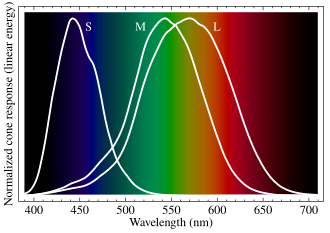
I have no clue what you are trying to say here. That fresh grass(1) is seen as green(2) in daylight(3) is a scientific fact that stands on solid empirical and theoretical ground. Electromagnetic radiation in the part of the spectrum that has a peak (concentrates most of its spectral power, the relative sensitivities of the long, medium, and short wavelength cones of the human eye) in the approximate range of 500-550 nanometers of wavelength, and therefore mainly stimulate the medium wavelength cones of the eye, will be seen as predominantly green(4). That’s a scientific fact, and there’s a whole branch of science behind this (colour science). Your brain’s interpretation of green (how you subjectively experience the colours “internally” in your brain and your mind) outside what can be explained and modelled by colour science, is something entirely different (that quite frankly sounds mostly like philosophical faff to me), and doesn’t affect how your brain can distinguish light with a predominantly ~500-550 nm component from other possible spectral forms.

(1) Most types? I’ve seen grass types that also has a blue component, thus also stimulating the short wavelength cone, making the grass look more like dark cyan. But that’s really beside the point, as those kinds of grass reflect light with a different spectrum from what we are talking bout here, i.e. grass that mainly has green components in the visible spectrum

(2) disregarding cases such as colour vision deficiency, tetrachromacy, and similar conditions and special atmospheric conditions that affect the transmitted electromagnetic spectrum

(3) assuming a blackbody emitter of around 5900K outside the atmoshphere

(4) disregarding optical illusions that confuse the brain, and arguments about which nuances or shades of green that is in question

Of course it can, but that doesn’t sound like someone is “genuinely seeking the truth” as your original post specified, it sounds like subjective bias, and an unwillingness to subject beliefs to objective scrutiny, but yes of course people do this, creationists, flat earthers, etc etc…