About that Rate of Rain Fall During that Genesis Flood Myth

This came about from an idea me neighbor had. He ain’t so good in math and asked me to calculate for him. He plans on using this against his next door neighbor whom pesters the 7734 out of him to attend church.

I post here for any person to use, regardless.

Tons ALWAYS = 1000kg. The best pseudo-facts are:

  1. Rained for 40 days. I have to assume this is a total of 3,456,000 seconds, using the assumption of 40 complete days.

  2. To cover the uttermost peaks “and then some” means minimum 9km (Everest ≈ 8,845m).

Don’t need much else. Calculate volume of Earth, then add another 9km to radius and recalculate. Subtract Earth’s volume, and you are left with the volume of water that covered the Earth. Then, you can calculate its mass from 1000kg/m^3. Remember, a cubic kilometer has 1,000,000,000 cubic meters.

VMR = Volumetric Mean Radius = radius of a perfect sphere containing the same volume as the oblate spheroid in question.

Earth VMR = 6371km
Maximum Elevation ≈ 8.845km (round to 9)
Minimum Flood VMR 6380km

Final Mass of Water = 4 597 068 188 938 064 432 124 kg (4.597 e21 kg)

Rainfall per Day = 114 926 704 723 451 610 803 kg (1.149 e20 kg)
Rainfall per Hour = 4 788 612 696 810 483 783 kg (4.788 e18 kg)
Rainfall per Minute = 79 810 211 613 508 063 kg (7.981 e16 kg)
Rainfall per Second = 1 330 170 193 558 468 kg (1.330 e15 kg)

Calculate the numbers your self. Just remember, the Rainfall Rates above are over the entire surface of Earth. I got the rainfall down to 2,608,177 kg per square km per second.

Now, think on this. 2,608,177 kilograms = 5,750,046 pounds.

That is 2875.023 short tons per square km per second. Do you NOT realize that kind of rainfall rate would literally crush and smash everything flat to the ground? Even that Arkthing? And it keeps dumping that much every second for 40 days (3,456,000 seconds).

For a 1 meter square, that is still 2.608kg (5.75lbs) of rain every second for 3,456,000 seconds!

Gads! What kind of heat does that generate? Remember, energy converts to power which produces heat.

Franklin
Also where did all the water come from, and where did it go, oh yeah the magic thing. The god was also clever enough to falsify the geological record so it shows no evidence of any global flood.

The attempts at pseudoscience around this are particularly hilarious. The “creation research institute” IIRC had some “scientist” propose a “hydraulic theory” of how the Flood would work. As the Bible talks about “the great fountains of the deep” being “broken open” as a partial source for the water, this “scientist” proposed enormous geysers spewing out water along with the rain.

The “scientist” was actually a mechanical engineer, but whatever.

I had a dust-up with someone from that org a few years back in which they insisted that any life that our probes might discover elsewhere in the solar system would have come from panspermia sourced in the Flood, with these geysers spewing material out into space that would eventually find its way to Mars or Europa or whatever. I was surprised to find out they were that intent on limiting god’s creation of life to earth and earth alone. Seemed a strange hill to die on; the scriptures, being ignorant of space, did not really ever say that life was created by god solely upon earth.

Elsewhere I heard confident prattling about how the earth was, pre-flood, surrounded by a heavy cloud layer which was gone after, and exposure to more radiation and direct sunlight also accounts for why people used to live for hundreds of years, and don’t anymore.

Even this non scientist sees the logical and factual holes that you could drive a truck through. But that’s never a problem for apologists.

1 Like

Just a truck? To me, those holes in religious science are so huge you drive the Milky Way through them. At least that is what I told Ken Ham and his AiG cohorts when we went at it for awhile.

Franklin

2 Likes

I have had the idea that the Biblical flood myth (which was plagiariazed from a much earlier Babylonian story) is a cultural memory of the flooding that may have occurred at the end of the last Ice Age.

As an example, the land bridge between North America and Asia was flooded when the massive glaciers melted, and places like the Persian Gulf were dry land (from what I understand).

10,000 years may seem like a long time for a folk memory to survive, but we have the Cosmic Hunt story as an example of a myth that survived the Ice Age, as this story exists in the mythology of the Native Americans and in mythos of the Europeans and some Asians . . . so it is believed to have traveled across the Beringea land bridge with the Asian people who would become Native Americans.

We also have stories from Northern Europe about trolls (whom are described as brutish, dirty, heavy-browed, and occasionally cannibalistic), and there is some thought that these stories and fairie tales are a cultural memory of the Neanderthals.

When we consider Noah’s Flood in light of these points, I wonder if the melting of the Ice Age glaciers (which caused the sea level to raise by 50 feet or something, as I am just writing from memory because I’m too lazy to look stuff up now) is the ultimate source of the flood myth.

1 Like

It could well be.

I suppose it could also be a generic story about [insert your favorite dystopian catastrophe here] as divine judgment by an all powerful being – and so this is a useful cudgel to keep people in line. Whether it was a concocted fantasy about such a catastrophe, or someone who saw an actual catastrophe and projected their gods onto it, probably ultimately doesn’t matter. It is a trope that serves a purpose.

I lean in your direction however, due to the recurring flood theme in different cultures. The open question for me is whether one group further back in time “started it” and thus gave others something to copy and adapt, or if they were all codifying verbal traditions about an actual event.

One thing is certain: in an environment where individuals seldom traveled more than a few miles in their entire lifetime, so that their whole “world” was some valley or plain they lived on, if that location flooded, then the whole world must have flooded. So your hypothesis is a good one.

1 Like

Some time ago, they found a layer of sediment in the T-E Floodplain (T-E = Tigris, Euphrates) that dates back to about 2900±0.1Ka BP which is literally the same time period covered by the Epic of Ziasudra (msp?). That epic was about a local catastrophic flood event. It transformed into Epic of Atra-Hasis, Epic of Gilgamesh, then Noah.

If memory serves, that sediment layer was about 11m thick. When you account for compaction, then that sediment layer as deposited would have been about 25m thick.

Thus, how damned catastrophic was THAT flood event.

And there have been hypotheses about the ending of the last Ice Age flood events that broke the Dardenelles and flooded the Black Sea(?).

Then there is the claim of flood myths across the entire Earth. My argument against that as evidence of a global flood is:

Where did humans settle into cities? RIVERS. And rivers are known to do WHAT occasionally? 'mic drop.

My main contention has always been: What is the one FACT (Formal Accurately Codified Truth) we know of Word-Of-Mouth stories? All are exactly like the “Fish-That-Got-Away” myths. It gets bigger, Bigger, BIGGER, until there is no truth at all. May be based on truth, but no longer has any truth.

Franklin

2 Likes

More probably, it was, as you hint at, something that originated in Mesopotamia. Mesopotamia was, at the dawn of agriculture and civiliziation itself, very fertile land that depended on regular flooding from the rivers in the area. Thus, flooding was not unheard of, and there would of course be catastrophically huge floods from time to time.

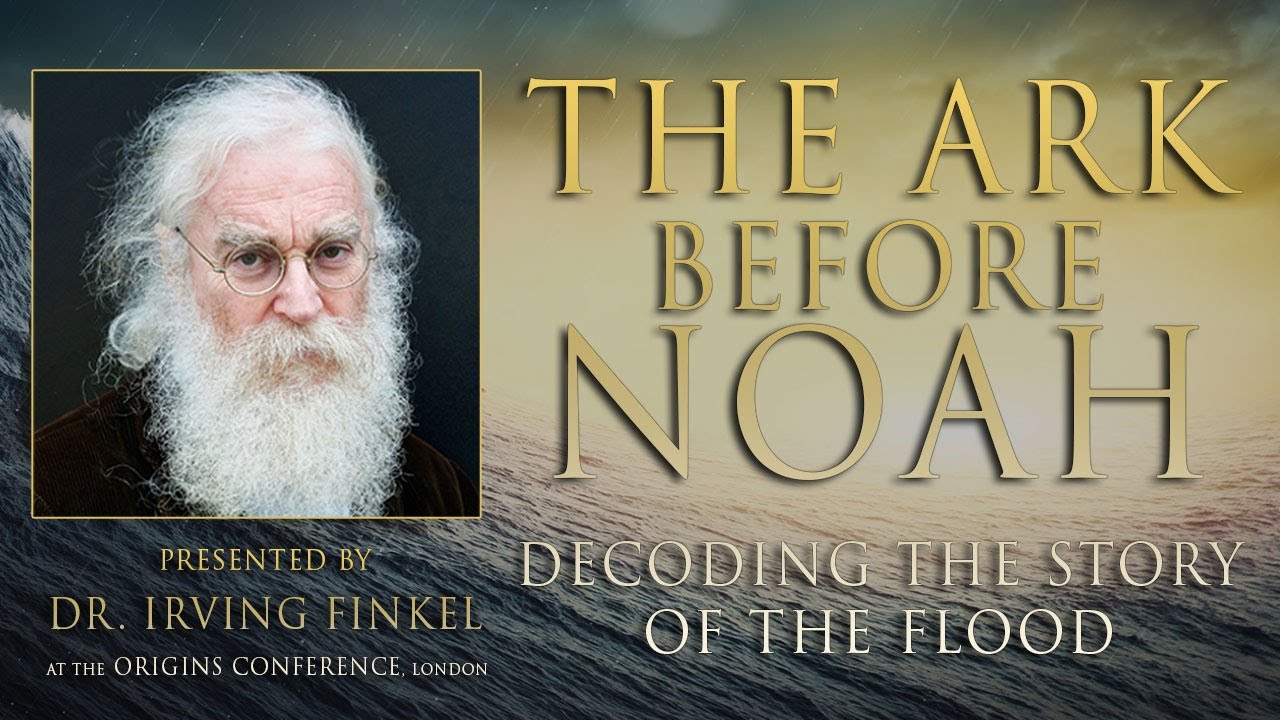
Ref. Dr. Irving Finkel, e.g. in the following talk (in fact, any talk by Irving Finkel is worth listening to):

1 Like

Thank you for posting this, and I will listen to him later.

After further thought, I still feel a need to cling to my melting glaciers position, because there are many original flood myths anong the Native Americans as well.

Also, the theme in the Noah / Gilgamesh flood is animal extinction, and the hunter-gatherers of Northern Europe would have been naturalists (as are all hunter-gatherers) out of survival during a harsh Ice Age.

They would have understood ideas like the carrying capacity of the land, the disease that can come from malnutrition and over-crowding, and the general health of a territory and what effects it. They may have interpreted these ideas through the lens of religion instead of science, but–in practical terms–their understand and conclusions are very accurate.

They would have been well aware of a mass extinction, and how this mass extinction could lead to human extiction (even if it was only their tribe), and how they would need rescued with animals to breed for continued food (and everything else an animal provides).

These ideas seem adjacent to the themes of the Noachan Flood, and these human ideas may have spawned agriculture.

I could even argue that the end of the last Ice Age may have been interpreted as punishment from the gods, as there were many mass extictions of the large animals (such as the wooly mammoth, the auroch, and the Irish Elk . . . among many others), and the human adjustment in this situation would have entailed starvation, disease, and inter-tribal war against a backdrop of mass flooding from the melting glaciers (although this flooding was probably gradual, they know about the flooding and destruction of valued territory from what was passed down).

Just so there’s no misunderstanding, I’m not a palentologist, a mythology expert, or a sociologist. I think these ideas make sense, but–for all I know–a legitimate anthropologist, archeologist, or sociologist might label me a crackpot for venturing a educated opinion when I’ve never obtained a degree these subjects, so mea culpa.

Aren’t you a sci-fi author? You’re allowed to speculate even if not.

I know a guy with a lifelong fascination with the Atlantis myth, who put that together with the idea that the marks of a technological civilization may not last as long as you’d think, and that humanity was fairly advanced in many respects in the distant past, and wrote a novel about the Atlantian civilization and its attempts to deal with what was destroying their civilization and way of life. I don’t think it was a commercial success, or frankly all that great, but I enjoyed reading it just the same. I believe it’s out of print now. I’ve lost touch with him – he moved to the Philippenes.

1 Like

I’m somewhat skeptical about the melting glaciers part, as those things do not melt catastrophically, but rather melt away relatively slowly (except for incidents like the type of floods that created the Scablands). We’re talking about sudden floods here, and floods that recede, with survivors that live to tell about it. Thus it will largely be incompatible with melting and receding glaciers.

Personally, I think flatlands flooded by a river is more likely, as it would be natural for human settlements to be located at or near a river bank. The river would not only provide food and water, but it would also be an important means of communication and trade, as it would be easier and quicker to transport large amounts of goods with a boat than carrying stuff over land, even if you get help from pack animals like camels or donkeys. So when a large flood comes after heavy rain, it would be quite the catastrophic event.

1 Like

I would point out that farming in a flood plain is a very common human mistake.

1 Like

Sure. But there are some difficult trade offs. On one side is having easy access to fertile land, food, water, and communication/trade routes, simultaneously risking a relatively rare event that perhaps occur only once per generation or even once per several generations. On the other side is to play it very safe, simultaneously making life potentially more difficult.

1 Like

My father hailed from St. Louis and had little sympathy for the farmers next to the Mississippi. The fields would flood on a regular basis and their response was a taller levie. And it only takes a single breach of a single levie to create a flood.

1 Like

That is true and undisputable. But modern knowledge and practices are not really that relevant to neolithic and bronze age setltement patterns and agricultural practices. Access to irrigation was (and is) alpha and omega to make crops grow in Mesopotamia. Without taking those chances, they would starve and die, or have to find somewhere else to farm that had the available natural resources and was not already taken.

1 Like

:face_with_peeking_eye:

1 Like

The most likely explanation why almost every major culture has a flood myth isn’t because of a worldwide flood, but because most major cultures happen in places where a lot of flooding takes place.

Some floods might be so bad that a creative storyteller could say that a really really bad flood once happened all over the world a long time ago.

4 Likes