sure, but I’m more sure it is false, than I’m sure you are a real person.
If I thought Buddhism or Hinduism was true I’d be a Buddhist or a Hindu. I figure it is more likely that the moon is made out of cheese.
sure, but I’m more sure it is false, than I’m sure you are a real person.
If I thought Buddhism or Hinduism was true I’d be a Buddhist or a Hindu. I figure it is more likely that the moon is made out of cheese.
In all these posts you have yet to reference any answers with solid evidence.
In the multitude of your posts you have yet to reference any solid evidence for your claims. Your belief is not evidence as has been pointed out to you by several posters.
You have yet to answer the questions posed above and yet, you post this:
I think its about time you made an evidential post before you are accused of just preaching with no substance.
JustCurious mentioned the 2nd Law of Thermodynamics earlier on.
Christians misuse thermodynamics to make a spurious argument in favour of their god. But they overlook the fact that to say anything about how thermodynamics operates in the universe you first have to know what kind of thermodynamic system the universe is; Open, Closed or Isolated. Which type applies is decided by whether or not it has a boundary. An Open system has no boundary, whereas Closed and Isolated systems do.
The question that kills the Thermodynamic argument for a Grand Designer is, “Where is the boundary of the universe?”
Nobody knows. In all probability nobody can know. The so-called ‘edge of the universe’ is not a physical boundary of any sort. It’s simply the limit of how far we can see. Furthermore, saying that the universe doesn’t extend beyond its observable limits runs contrary to current cosmological science and also violates the Cosmological Principle.
Cosmological principle - Wikipedia
So there is no physical boundary that we know that sorts the universe into a particular type of thermodynamic system. Not knowing what type of system it is we can’t say how thermodynamics operates on a universal scale.
Which means that no argument using thermodynamics can be used to say that there is a god.
Thank you,
Walter.
Walter, there’s a book by Stephen Meyer that’s entitled Signature In the Cell. I encourage you to get a copy and read it: for you may not find God’s Name written there, but you’ll see that His Fingerprint is on every part of creation.
Walter, it’s clear that you are well-versed in the various theories and scientific principles–but, it’s clear that you have “faith” in what you’re saying is true and, in reality, science becomes a religion in-and-of-itself, with scientists as the priests. Thus, it follows that it takes more faith to be an atheist than it does a Christian: especially when “the heavens (outer space) declare the Glory of God and the firmament (the sky above, atmosphere) shows His Handiwork.”
Thus, when you look at the First Law of Thermodynamics and the Second Law of Entropy, it’s clear the universe only has a finite amount of energy (which is a constant) and nature tends to bring things to disorder, i.e., things naturally fall apart. That’s why Astronomer Robert Jastrow likened the universe to a wound-up clock, which is running down–which then implies that Someone must have wound it up to begin with.
Thus, the argument that matter has always existed is a fallacious one because it contradicts the Second Law of Thermodynamics. And, with regards to an ever-expanding universe, we realize what is expanding is space itself, not the universe expanding into empty space.
Likewise, it’s clear that there was only a swirling dust of mathematical points which kept combining through trial-and-error to form our space time universe: for, in reality, this was not a scientific theory; it was actually self-contradictory pop-metaphysics (or a made-up explanation) that “assumes” time and space before there actually was time and space.
That’s why it’s impossible to explain how the universe began from absolutely nothing: which is what prompted Aristotle to write “Nothing is what rocks dream about!”
Walter, as I watched the video which became a trigger-point for you abandoning everything you’ve ever previously believed, my heart was saddened: for you were jumping into vast “nothingness” instead of resting in assurance and hope that what the Bible says is true.
This is bullshit, and shows that you do not understand science. A big difference between science and religion is that with religion, one has to believe (without evidence) that it works, and even then it doesn’t really work (think e.g. prayer-assisted healing). With science, one doesn’t even have to believe in any of the subfields for it to work and to see the results, e.g.
plus more than I can possibly mention here. All of them work, and do NOT require “faith”. Even if applied to luddites that deny the merits of science. The collective knowledge we have through the fields of physics, chemistry, biology, geology, and medicine, plus its subfields, have given us an unprecendented field of knowledge about life, the universe, and everything. And all of this works without us having to have “faith” in science. A computer does not stop working if you “lose faith”. GPS will still work even if you don’t believe in it. Communication satellites and subsea optical cables will still transport information, even if you deny the principles of optics, quantum mechanics, relativity, and information theory. And so on.
So what concrete actual evidenced knowledge has religion given us? That is an open question.
So what if it is? This does not have any consequences for us in our lifetime, or in many, many generations. We happen to be here in a place and time with conditions conducive to life on a planet/planets orbiting a suitable star. Does physics fail if the universe “ends” 1078 years from now. Nope. If the universe really will disintegrate, it will be a victory for the predition powers of physics, even if the time scales we are talking about here are more tentative than definite, and we in any case can not be there to observe it. Thus, it will alway be pure hypothesis/theoretical musings. But the idea of a god that has “always” been, and will always be, to infinity, fails miserably.
That is not what physics and cosmology claims. You are making a strawman argument. And thus your argument fails.
That is uncontroversial. I don’t understand why you bring that up at all.
You are using a parodic toy model to make an argument. Thus, it is a strawman argument. And you fail. The assumption of cosmic inflation (“big bang”) only goes as far back as current theoretical frameworks allows us. Extrapolating far enough back in time only goes so far, to where our current understanding of timespace breaks down, and talking about “before that” makes no sense. Again, you are making a strawman argument, and you fail.
Before you lash out against physics, cosmology, and science again, how about lashing out against actual physics, cosmology, and science, instead of straw men?
Good morning, Get_off_my_lawn. Some pretty strong words so early on a Sunday morning; but, I’ll not attempt to rebut them: for it’s impossible to do so when one’s mind is already made up. Thus, as someone once said, “If you’re right and I’m wrong (as an atheist), then I’ve lost nothing for believing in God: for I’m simply be a dead piece of protoplasm on the side of the road. But, if I’m right and you’re wrong, you have everything to lose; but, it’ll be too little, too late to admit that you were wrong.”
So, believe what you will. It’s clear I can’t change your mind (not that I could if I wanted to)–and you won’t change mind. But, I’d rather believe what I do because I do know it’s true and don’t have to fear what awaits those who refuse to believe when they stand before God at the Judgment (Romans 1:18-32; Hebrews 9:27; Revelation 20:11-15).
Living things were not created, they evolved slowly over time, this is an objective scientific fact.
That’s a false equivalence, the definition of faith is distinct from the definition of religious faith:
noun
complete trust or confidence in someone or something.
strong belief in the doctrines of a religion, based on spiritual conviction rather than proof.
the first is entirely justified in the case of science, based on objectively verifiable evidence, the second is just a subjective religious belief.
Utter nonsense, this is duplicitous semantics based on a false equivalence fallacy, what’s more you are rehashing a plagiarised claim that has failed. Atheism is the lack or absence of belief in any deity or deities, it is not a claim, and it requires no faith, we are in fact all born without beliefs, and thus all born atheists.
You are using another false equivalence to imply that the order we observe on this planet in biological things is at odds with the 2nd law of thermodynamics, but this planet is not a closed system, if you glance up you’ll notice in the daytime we get light and energy from a nearby star.
Who has made this argument here? Also which principle of logic does the argument violate?
You seem to be making things up now, please link a citation from any credible scientific publication that offers evidence for any deity, then explain why atheism rises sharply among scientists, and exponentially so among elite scientists best placed to understand what is evidenced and what not by our current understanding of the universe and its origins.
Again who has made this claim here apart from you? FYI the claim goddidit has no explanatory powers whatsoever, it is an appeal to mystery and magic.
You’re preaching again.
Atheism is not a claim, or a belief.
You’re preaching again, you have not offered anything approaching evidence that any deity exists, and this mangled use of pascal’s wager fails until you do, as no one has to accept your unevidenced assumption that anything “await us” when we die.
Well leaving aside the tired old Pascal’s Wager chestnut, which if you care to, you can read many threads about that from the past – here it is in a nutshell. Your belief is an un-evidenced preference. Props for honesty.
And based partly on fear of divine retribution, sadly. I hate to see people trapped in and dependent on abusive relationships. But so it goes. “Love me – or else” is something I hope you wouldn’t accept from a partner or friend; you shouldn’t make an exception for a deity.
By the way I’m not interested in changing your beliefs either, I’m more the atheist version of “always be ready to give a reason for the hope that is in you” and then it is up to the individual. But I would like you to be truly free to hold those beliefs. I don’t see that you are, to whatever extent you do it out of fear.
I would only see that by faith JC. Just as you do.
We both know that there is nothing in DNA, in the world or even in the entire cosmos that specifically identifies Jesus as the intelligently designing creator. Isn’t that so?
Which is why Muslims, Jews, Sikhs, Hindu’s and others can use the same intelligently designed cosmos argument as you do. As I already mentioned, this is a level playing field and no particular god makes his / hers / its identity known through anything in nature. Isn’t that so too?
So you’ve simply made your choice, not according to the evidence (there is none) but according to your emotions and your personal preferences. Isn’t that also the case?
Which means that the message from you, encouraging me to look at a certain book, is a call for me to copy you and make the decisions based solely on emotions and preferences. But I’ve already clearly stated that I’m not going to do that.
A ) Because you haven’t presented any definitive evidence that positively identifies Jesus as the intelligently designing creator.
B ) Because I have no faith with which to make that decision.
and…
C ) Because there is nothing to choose between your personal preferences and the preferences of, say, a Muslim or Jew or a Sikh, I don’t see any reason why I should make the same emotionally-driven decision as you have and select Jesus out of all the other equally likely candidates.
However, you could change everything by just presenting one item of objective evidence that doesn’t depend upon faith. I’m still open to hearing about this from you, if you can present it.
Thank you,
Walter.
That’s just your emotionally-driven personal opinion, JC.
It doesn’t persuade me of anything and it doesn’t sway me at all.
But if you presented what Sheldon, Old_man_shouts_clouds, Get_off_my_lawn and myself have repeatedly asked you for, then I might be swayed and persuaded.
How about it?
I’m sorry JC, but you are wrong on two counts.
But I’ll have to explain that across two posts.
First, science is not a religion, scientists are not its priesthood and faith has no place in science. You are overreaching by trying to paint something that is strictly agnostic as something resembling a religion. What scientists have is secular confidence in the validity of such things as Plate Tectonics, General Relativity and Evolution. That confidence comes, not from faith but from evidence and data. So there really is no argument to be made that scientists employ faith in any way.
Instead, this is actually a item of Christian disinformation and propaganda that is bandied back and forth in the echo chambers of Christian discussion forums and similar. If Christians really understood how science works they wouldn’t listen to such nonsense.
Also, there is no holy book that all scientists venerate. If anything, the opposite is true. Everything in science is always in a state of flux, with new evidence and new theories supplanting older ones. That’s because unlike the Bible, where its contents are set in stone for all eternity, science is a dynamic system of thought that grows and evolves as more things are discovered and more things are explained by it.
Finally, and in complete and utter contrast to a religion, science makes no promises to deliver absolute truth. All scientific findings, theories and hypotheses are tentative and temporary and they only deliver provisional truth. That’s because science is always open to the possibility of new evidence and new data overturning older paradigms. And I can even give you a worked example from the history of cosmology. In the form of a time line that shows how new evidence has caused our understanding of the universe to change, change again and keep on changing.
19TH CENTURY
The universe was accepted to be static and eternal, with new stars replacing old ones, endlessly.
1929
Edwin Hubble discovers that the universe is not static, but expanding. Running this motion backwards in time suggested that the universe might have once been extremely compressed, dense and hot.
UP TO 1998
Cosmologists expected the expansion of the universe to slow down, stop and eventually reverse itself, returning to the hot, dense state it might have been long ago. But two independent groups of astronomers found that its expansion was accelerating, making a re-collapse unlikely. If the acceleration continued the universe would expand forever, become dark and cold and lifeless.
2025 / 26.
New studies from South Korea have shown the the rate of accelerated expansion isn’t increasing exponentially but is instead slowing down. Quite what this means nobody knows yet. Will the expansion continue forever, but at a slowly decreasing rate. Will the expansion come to a halt? Will it reverse itself, leading to a Big Crunch? Nobody knows.
This is just one example of the restlessly dynamic and changing nature of science, JC. Which is nothing at all liked the fixed and changeless nature of a religion. So please, no more of this disinformation from you.
Thank you,
Walter.
Just to clarify in case any reader needs it, there are two primary accepted definitions of “faith”. One is the “secular” or colloquial definition of “confidence justified by past experience, evidence and/or available data” and the other “religious” definition and its near-polar opposite is, “belief without evidence or despite experience”. The religious often conflate one definition with the other, as when claiming scientists have “faith”. It is not an honest argument.
Stephen Meyer is a well known liar and crackpot on the subject. If he told you “A”, you should assume “not A”.
Your citing of him suggests you are either extremely ignorant on the subject or as dishonest as Mr. Meyer. I’ll give you the benefit of the doubt and assume you are just wildly ignorant.
So you’re not even going to try to explain to the other readers why you think I am wrong? I think that’s a bit passive. Are you here on this discussion forum to discuss, or are you here to preach?
That’s Pascal’s wager, and it has been debunked lots of times as a silly argument, both on this forum and elsewhere. I also commented on its silliness earlier, with a nice table to help illustrate it.
OK, so you really are here to preach, not to discuss. Good to know.
No, you can’t make that claim, JC. Nobody can. And I’ll explain why.
An important concept in thermodynamics is the thermodynamic system, which is a precisely defined region of the universe under study. Everything in the universe except the system is called the surroundings. A system is separated from the remainder of the universe by a boundary which may be a physical or notional, but serve to confine the system to a finite volume. Segments of the boundary are often described as walls ; they have respective defined ‘permeabilities’. Transfers of energy as work, or as heat, or of matter, between the system and the surroundings, take place through the walls, according to their respective permeabilities.
Thermodynamics distinguishes between three types of system; Open, Closed and Isolated.
You have claimed that the universe has finite energy, making it a Closed system. But a Closed thermodynamic system must have boundary which limits the quantity of energy within it.
So where is this boundary, JC? Where is the boundary that demarcates the edge of the universe? You can’t be speaking about the edge of the Observable universe, because that is only a visual horizon beyond which we cannot see. Just as we can’t see over the horizon on the Earth. The Earth continues beyond ‘our’ horizon and even though we cannot see further than our cosmic horizon, we know that the universe must extend far beyond that limit.
How do we know this? Well, if all the galaxies that are expanding away from each other and the edge of the observable universe WAS a physical boundary, then they would just go SPLAT! against that impermeable wall, like bugs on a windshield.
But they don’t and they can’t. If galaxies had been doing this continually for 13.7 billion years then the amount of thermal and gravitational energy released by them when they squish up against this wall would be detectable by us. In fact it would be the most energetic thing in the sky, washing out and overwhelming small fry like gamma ray bursts, supermassive black hole mergers and supernovae.
But we don’t see this massive thermal and gravitational signature from the wall delimiting the edge of the universe. The boundary that allegedly makes the universe a closed thermodynamic system. Instead, what see are galaxies quietly dropping out of view, with no fuss at all. From the logic of this argument cosmologists conclude that the universe extends far beyond the tiny portion we call the observable universe.
So, could there be a boundary to the universe, beyond the limits of what we can see? Let’s explore that question using General Relativity, even though the answer can’t come to us from looking beyond the limits of the Observable universe.
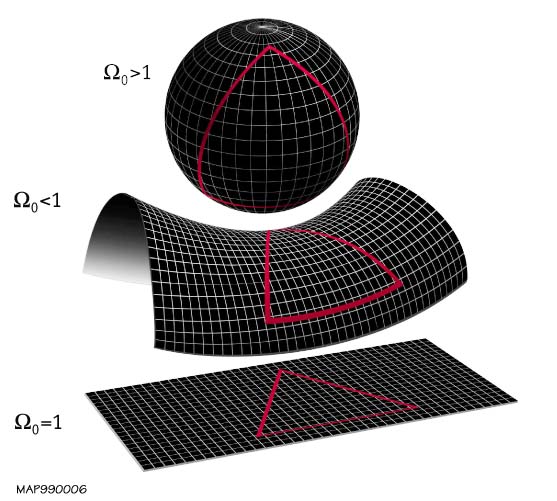
Shape of the universe - Wikipedia
General Relativity has only three possible solutions for the overall shape (topology) of the universe; Closed, Open, and Flat. In the above diagram the Closed universe is the sphere. The saddle-shaped one is Open and the Flat is, well… the Flat universe.
Two of those solutions, Open and Flat, are infinite in size and have no physical edge or boundary. So they are Open thermodynamic systems. They contain infinite amounts of energy and can never run down or run short of energy. Only the Closed universe has a boundary and so it qualifies as a Closed thermodynamic system. It contains a finite amount of energy and can run down via entropy.
But do we know that our universe is a Closed one? That, because it has a boundary, it can run down because of entropy? The answer is that we don’t and can’t know from looking beyond the limits of the observable universe. That is a physical impossibility. It can never be done.
So, all we have left to go on is what we CAN observe, which is everything that lies within the observable universe. What does that tell us? Here’s what Google’s AI overview has to say about it.
The universe is spatially flat to within a 0.4% margin of error, meaning its geometry follows Euclidean rules (e.g., parallel lines remain parallel) on large scales. This indicates the mass-energy density is at the “critical density” necessary for it to expand forever without collapsing. This remarkably precise, and unexplained flat state, known as the flatness problem, is theorized to result from rapid cosmic inflation in the early universe.
So, our universe appears to be Flat. Which, in the terms of General Relativity and thermodynamics, as explained above, can mean the following. If the universe is Flat it is infinite in extent and is therefore an Open thermodynamic system that can never run down through the action of entropy.
So we are left with just two options, JC.
First, to conclude that because we cannot see the full extent of the universe, we cannot therefore say what kind of thermodynamic system it is. It could be closed, open or isolated. But looking for an answer by looking further than the limits of the observable universe just isn’t an option.
Second, we go with the current data, which strongly suggests that our universe is Flat. If this is so, then we live in an infinitely large universe containing infinite amounts of energy, that can never run down due to the action of entropy.
Sorry to get technical about this, but the argument you were presenting about thermodynamics was quite wrong and needed correcting.
Thank you,
Walter.
Oh and I notice that you’re touting the long discredited Christian disinformational meme that science has discovered the universe came from nothing. Sorry, but that’s not so.
Here’s the beginning of the timeline of the evolution of the universe, from that Wiki page.
## Timeline
Main article: Chronology of the universe
According to the Big Bang models, the universe at the beginning was very hot and very compact, and since then it has been expanding and cooling.
### Singularity
Existing theories of physics cannot tell us about the moment of the Big Bang. Extrapolation of the expansion of the universe backwards in time using only classical general relativity yields a gravitational singularity with infinite density and temperature. However this classical gravitational theory is expected to be inadequate to describe physics under these conditions. Thus the meaning of this singularity in the context of the Big Bang is unclear.
You see, JC? There’s nothing there at all about the universe coming from nothing.
The furthest back we can extrapolate back to is AFTER the Big Bang event itself, not BEFORE.
But if you want me to explain about the initial singularity and the Hawking - Penrose singularity theory of 1970, that predicted the universe emerged from absolutely nothing, then please just ask. I’ve been studying this subject for decades and would be happy to explain it to you.
Thank you,
Walter.
Walter, I appreciate your candor and willingness to explain your beliefs while seeking to show how my beliefs and statements are lacking in validity. I also appreciate one of the members in this thread on “Do you believe in a deity and deities—and why?” stating that I’d moved away from discussing the issue to preaching.
That being said, I’d like to pose this question to the group: “Is there an objective moral standard? If not, why not and what are the implications of such a belief?”
What about addressing all or at least some of the other objections to your claims before gish-gallopping along to the next issue?