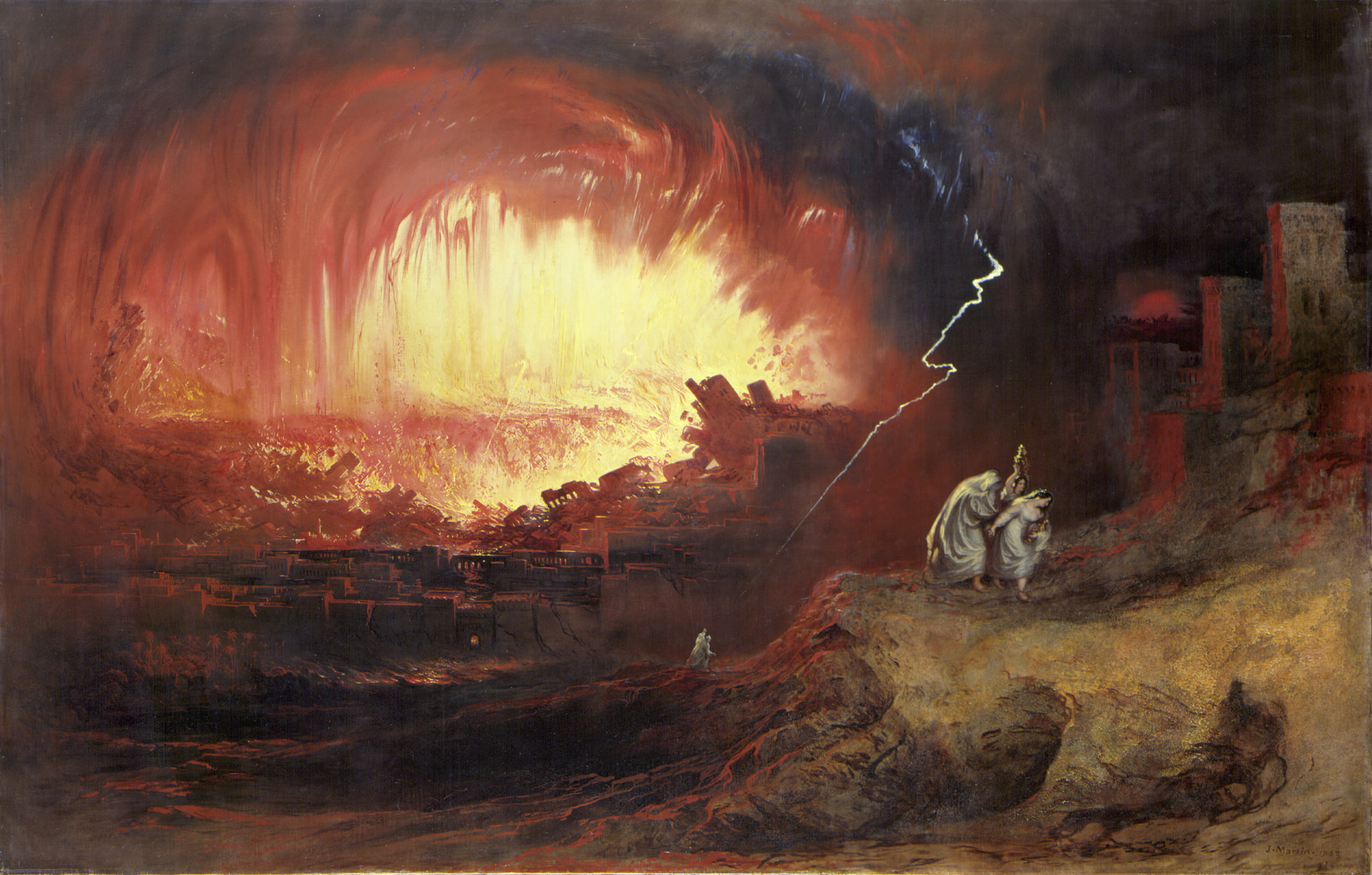
Terms & Agreements for Debate

Yes, thanks for clarifying a point that I failed to make clear.

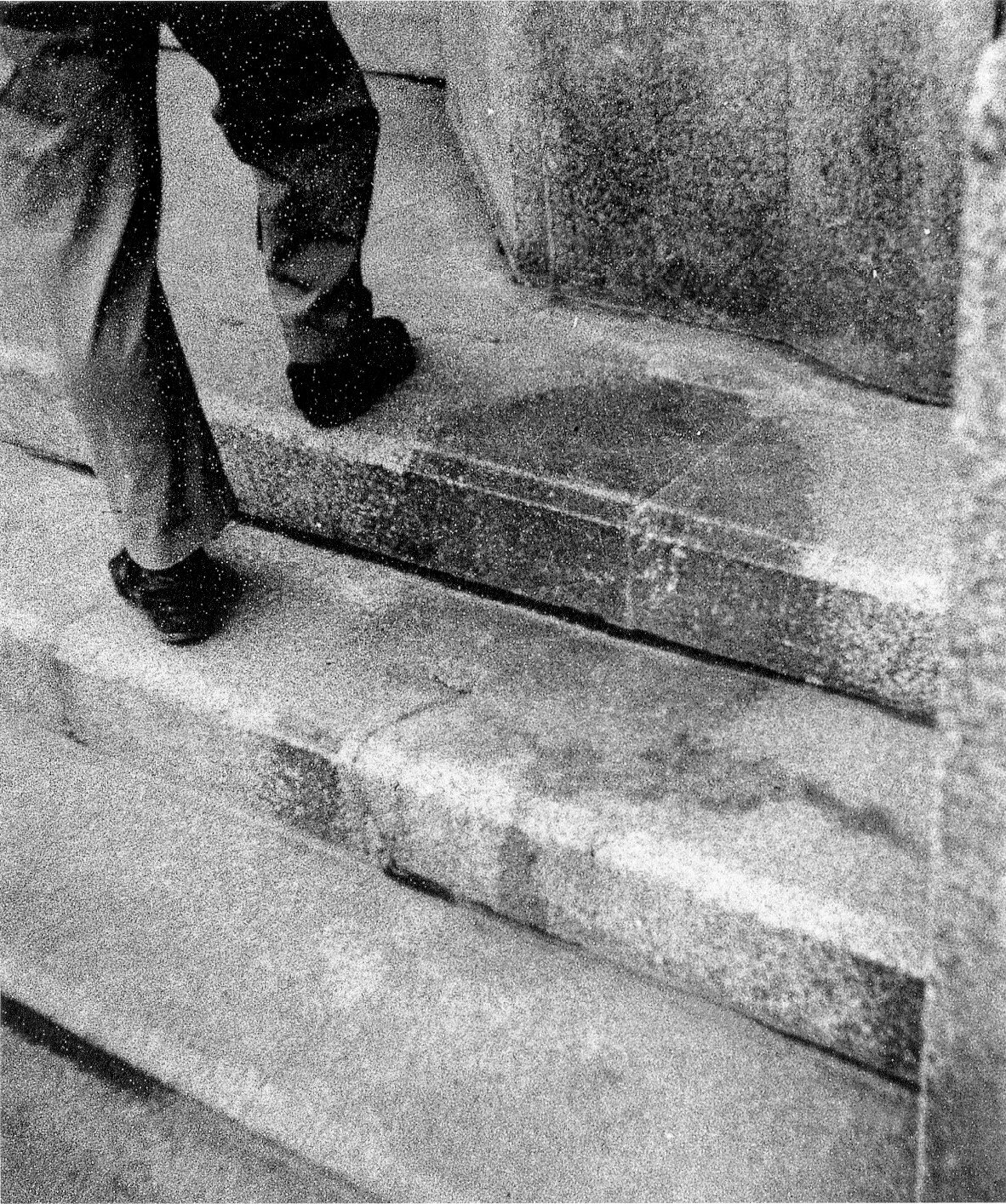
Our thoughts and ideas influence reality indirectly. Whereas reality influences our thoughts and ideas directly. With reality influencing the people of Hiroshima and Nagasaki so directly that it turned them into shadows.

2 Likes

We should use this unerringly whenever a creationist claims the theory of evolution is “just a theory”, and insist they go to Hiroshima, and tell them all that atomic theory is “just a theory”.

But, but
 “Atomic bombs and all that horrendous devilry was invented by atheistic men corrupted by Satan!”

2 Likes

Waitaminute!

Don’t forget God nixed two cities l-o-o-o-n-g before men got in on the act.

Well, look at Stalin and moa, see what can happen when people don’t believe in a deity, and mermaids of course, and unicorns, as I am dubious Stalin or Mao ever believed in them, or garden fairies, yet the lack of those beliefs are mysteriously left unmaligned.

The problem was men wearing pants, obviously.

Maybe Mao and Stalin didn’t have a firm understanding of modal logic?

All subjective positions are held on the position of evidence (whether little or much; rational or irrational). The question you pose is when we translate evidence (quantitative data) to meaning (qualitative data).

As subjective agents, we cannot know all subjective positions due to our epistemological boundness. In this, to know that which is outside of our experience (in the qualitative way), we must exercise faith (extension of quantative principle) to the quality we perceive. In this, we join the Absolute, making our subjective agent whole (quality becomes quantity through faith coupled with Absolute Reason).

Currently, yes, as we do not yet dwell in full communion with the Absolute. We can know the Absolute with certainty through pure reason, but only know the Absolute through applied reason through faith. This is the entire journey of faith: to seek the Absolute and to translate one’s ways through the coupling of reason and faith to live a holy life.

So is your objection is that you do not see the practical application of the model presented?

Nomologically possible: the set of all states of affairs that could obtain without violating the laws of nature.

Gödel’s God-like being is nomologically possible for a very specific reason: Gödel’s God-like object does not violate the laws of nature, because it is not the kind of object to which the laws of nature by inference apply. The laws of nature of Gödel’s God-like object essentially apply: meaning that Gödel’s God-like object is one with the laws of nature: not one which the laws of nature rule over.

A normative meta-modal claim is not subjective because it does not report anyone’s attitudes, preferences, or psychological states, but instead governs the standards by which modal judgments are to be made. A normative meta-modal claim is a claim about how modal concepts ought to be used or constrained. Subjectivity would require attitude-dependence: preference-expressing. If one is reasoning modally at all, one is bound by these constraints. That is rule-governed, not preference-expressing.

These three claims are first-order empirical or metaphysical claims about how reality is, whereas Gödel’s God-like object is a second-order modal claim whose denial requires rejecting the modal framework itself.

The three claims you list are world-descriptive:

(A) There is extraterrestrial life
(B) The universe is infinitely big
(C) There is no god or gods

All three have the same logical form:

∃ / ∀ claims about the actual world

They assert something about what exists or about the structure of the actual universe.

That makes them:

First-order

Truth-apt

Answerable to evidence or theoretical constraint

Rationally deniable without contradiction

Gödel does not assert:

“There exists a being in the universe with certain powers.”

Instead, he asserts something of the form:

Given certain modal-normative constraints on properties, a God-like being is possible (and hence necessary).

It is about what counts as a coherent modal ontology, not about what we happen to observe.

And a bonus for Sheldon


Why this does not beg the question

This does not prove God exists simpliciter.

It shows:

Gödel’s God is not on the same epistemic playing field

Treating it like an empirical hypothesis is a category mistake

Dismissing it as “just another belief” misunderstands its logical role.

And I think now that I will end the debate


The denial “a God-like object does not exist” attempts to function as a first-order existential negation, but Gödel’s God-like object is generated as a second-order modal necessity; the denial therefore targets the wrong logical level and cannot be modally coherent without rejecting the modal framework itself.

The denial typically takes the form:

∃x (God-like(x))

But this is:

A world-level negation

A claim about what exists in the actual world

A denial appropriate only for contingent entities

It implicitly treats the God-like object like:

Mermaids

Aliens

Physical gods

That is a category error.

So to assert:

∃x (God-like(x))

while keeping the axioms is equivalent to asserting:

□∃x (God-like(x)) ∧ ¬∃x (God-like(x))

Which is an outright modal contradiction.

Thus the denial is not merely false; it is inconsistent with the modal logic.

And that which is inconsistent with the modal logic is irrational.

And that which can be asserted without reason can be dismissed without reason.
In part, but more fundamentally it is just simply not vetted (or vettable). You can calculate, say, the amount of lift / speed / thrust to fly a plane and lo and behold, if you do the math correctly it works out that way with an actual plane. We are having this conversation because the math proves out concerning electromagnetic forces and computational theory and networking and so on. Yes those are practical applications but they also demonstrate that math is a valid model of actual reality. We can trust the model and expect it to work because it HAS worked on increasingly elaborate applications.

The whole point of any theorem is to be proven, meaning not just that it is self-consistent logically but also that it accurately predicts and models the real world in some intersubjectively observable and not strictly personal way. Otherwise so far as I can see it’s nothing but mental masturbation.

1 Like

Modal logic is a mathematical model. It is the very model upon which the sub-models you demonstrate are based upon. The physical is contingent upon modal logic in the sense that physical intelligibility, lawhood, and counterfactual structure presuppose modal structure, whereas modal structure does not presuppose the physical. The physical is contingent upon modal logic because physical law, explanation, and counterfactual support presuppose a prior space of necessity and possibility, whereas modal structure remains coherent independently of any physical instantiation.

The reality (and excuse my use of the word) is that you lack faith. You lack faith that the application of the model presented has any practical significance.

If your open to it, would you be willing to review the use of the Gödel’s model in practical ways?

It can have no coherence or relevance if there is no instantiation you can point to that requires the structure you describe and has no other explanation.

If you mean faith in the religious sense, that’s a failed epistemology. If you mean trust, that would be the product of living a reality predicted, informed, and explained by Goedel’s theorem, just as I, e.g., earn a living every day because of computers and all the mathematical structures that support and inform computing.

Feel free to regale us, but to be honest, I am not holding my breath.

The definition of faith that you are using differs from the definition of religious faith.

noun

  1. complete trust or confidence in someone or something.

  2. strong belief in the doctrines of a religion, based on spiritual conviction rather than proof.

Not all positions are equally subjective, no faith (the religious kind) is required to accept objective facts underpinned by an overwhelming amount of objectively verifiable evidence, and a strong method that rigorously tests and examines that evidence. An acceptance of scientific fact is as far from religious faith as one can imagine.


and as I keep pointing out, the results are manifest in matching objective reality as they work, unlike religious faith, which is entirely subjective.

There is nothing in our current understanding of nature that evidences the possibility of any deity, or anything supernatural. We also don’t know everything about nature, so your claim seems like hubris, closer to epistemic possibility really.

Only a basic principle of logic, by using unevidenced assumptions about the very thing he is arguing for, in the premises of his argument. We could of course as has been explained make an identical argument, and make the same unevidenced assumptions about anything, a unicorn for example, and by your rationale unicorns would be nomologically possible.

The term you used is a subjective philosophical term. It’s a tired old trick in religious apologetics, to pretend one unevidenced subjective claim can support another.

That’s a lie, and all anyone need do is read the objections littering this thread, or even Google criticisms of Gödel’s ontological argument for a god.

Exactly, apologists have been trying this canard for ages, it’s nothing new.

1 Like

I should rather you honestly addressed the unevidenced assumptions (question begging) in the argument, with something more than handwaving and word salad.

This needs unpacking.

Mordant mentioned the example of an airplane earlier, where trust is gained in the abstract mathematical model of how the plane should function by comparing to how it does function. One feeds into the other. The empirical results allowing the abstract model to be trusted. The empirical proving the veracity of the abstract in the real world. This world. Our world. Your world.

So, bsengstock20, when you write that the results are manifest in matching objective reality, if you are not describing the process that mordant described, then what do you mean by “objective reality” in your statement?

If not the contingent and provisional realm of the empirical, then what?

Why would we want to exercise faith in something that modal logic points to?

Why would you think that full communion with this thing is possible?

Why would you think that the Absolute wishes to have communion with us?

Is there any evidence, modal or otherwise, that the Absolute wishes to be in communion with us?

What possible benefits could there be from communion with the Absolute?

Shouldn’t we just use modal logic as a tool to get jobs done rather than using it a starting point in a voyage of faith?

This is the entire journey of faith: to seek the Absolute and to translate one’s ways through the coupling of reason and faith to live a holy life.

Please define your usage of the word, ‘holy’.

Indeed, though it was originally my example, but the point is compelling, against @bsengstock20 claim that modal logic is superior to empiricism.

Though here I was addressing his false equivalence using the word faith, by suggesting entirely subjective claims, and empirically validated scientific facts both require faith, which is also untrue of course, as the practical application of science demonstrates in its results.

Religious faith provides no empirically or objectively validated evidence, empiricism does. Faith (religious) is the excuse people use to believe something when the evidence does not properly support it. Since holy is defined as la religious and theistic pursuit, this claim again reinforces the point that (religious) faith is useless to an atheist. It roundly defeats the claim @bsengstock20 made above that all claims require it.

There is of course a second false equivalence hiding here, as though all beliefs claims and assertions are subjective, they are not of course equally subjective. With religious faith at the bottom of the evidentiary scale and objective scientific facts at the top.

Describing claims as subjective is too vague, as they may not be equally subjective. If they are entirely subjective claims then we don’t need faith at all, an admission that we don’t know is sufficient, and investing credulity in a belief when we have no knowledge it is true is absurd, thus withholding belief is the reasonable position for agnosticism.

As for Modal logic, we have shown why it is unreasonable to claim it is superior in understating objective reality to empiricism, and more importantly the example, Gödel’s is a poor example of that method, as it is biased, and only championed by people who want to believe its conclusion.