If objective evidence doesn’t exist, then does an objective reality exist?
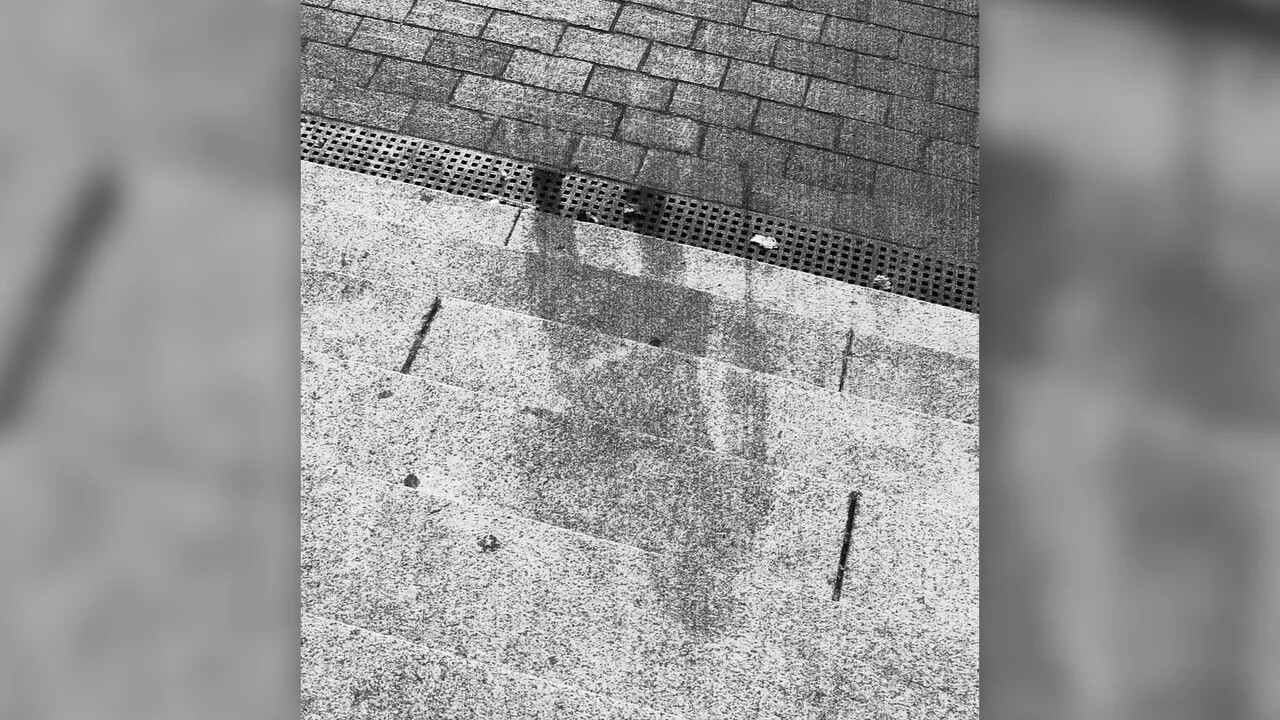
When answering please remember the examples of Hiroshima and Nagasaki.
If objective evidence doesn’t exist, then does an objective reality exist?
When answering please remember the examples of Hiroshima and Nagasaki.
If objective evidence doesn’t exist, then we’d have to give equal merit to the claims, the earth is flat, and the earth is not flat.
The claim is asinine, like claiming there’s no objective way to evidence the existence of cutlery…stab yourself in the nuts, that’d be a pretty compelling experiment. Don’t worry the pain’s imaginary like deities, and your nuts won’t turn blue and fall off.
Maybe…
If anyone thinks claiming to have seen a mermaid differs from claiming to have “experienced” a deity in any objective way, I’d love an example? FYI, bare appeals to numbers are not objective.
In the meantime for shits and giggles, here’s a few simple but objective ways to evidence cutlery exists….
Oh dear…the law of non-contradiction goes bye bye again…like claiming a deity literally knows everything, but does not know exactly what will happen, the mental cartwheels are impressive mind.
Oh really?
Visceral interaction: The tines can pierce deformable solids (e.g., a piece of meat or fruit) due to the mechanical concentration of force at the tip:(P = F/A) Where Pressure P is Force F applied over a very small Area A).
This one was quite humorous:
Inventory Tracking: The physical reality of forks is sometimes comically verified by empirical studies. For example, The Medical Journal of Australia published a longitudinal quality-improvement study that physically tracked marked forks and spoons to scientifically map “utensil disappearance” in hospital breakrooms.
You could try some more petty vituperation, maybe no one will notice you just roundly contradicted yourself on two different points.
Well, right now, I’m curious to understand how Rat_Spit’s worldview works in practice, Sheldon.
He’s claimed that objective evidence doesn’t exist. That’s up for debate.
But what about objective reality? If he further claims that objective reality doesn’t exist, what then?
I suppose I’m just trying to discover how far he takes his solipsism.
Is he an epistemological solipsist or a metaphysical solipsist?
Hopefully he will be forthcoming on the matter.
Thank you,
Walter.
Possibility. The possibility is there, imbedded in the properties of the early universe. The potential for stars, the potential for gravity, the potential for solar systems, water, clouds, DNA, unicellular life, photosynthesis, mitochondria, multicellular life, perception, consciousness - it’s doesn’t arise “accidentally”. Please Demonstrate that all of the order in the universe is “accidental”.
Out of curiosity can you make analogies between things which are widely different in scope and magnitude. Do comparisons of the structure of the atom hold up to the structure of the solar system. No, they don’t. Like you drawing a comparison between mermaids and deities. It’s not a relevant analogy. And it’s irrelevant also on the basis that the human mind has the faculty to perceive the Divine. Yours is faulty. It’s broken. It doesn’t work. The fact that you are an atheist is a consequence of your spiritually deficient faculties. You are like a man in need of a pair of spectacles, waving your arms about claiming that the mountains are in fact giants.
It remained theoretical until the 20th century when we were able to gather empirical evidence based on sensory input. All assumptions and mathematical calculations suggested the world was round. The proof is found in subjective perceptual sensory input. A picture and a video.
Claiming i have seen a fork is objective evidence for forks.
You’re not acknowledging what I’ve been saying so I will respectfully decline to engage with your non-sequiturs.
So, I have to do your work for you? Ho hum.
“Putting these together, objective evidence is:
Evidence that can be observed, measured, verified, or independently confirmed without depending primarily on an individual’s personal opinions, feelings, or interpretations.”
Which makes sensory perception of forks and the divine examples of objective evidence. My perceptual faculties can confirm the existence of forks and the divine. Since your spiritual perceptual faculties are faulty you cannot objectively evidence the existence of the divine. You remain in a state of ignorance.
You make the bed you lie in, I suppose.
Word salad. Add a little vinaigrette and I might consider trying to digest it.
Since you insist on pushing this strawman, I respectfully decline to engage in your non-sequiturs.

Of course. This is the standard way I confirm my belief in forks.
They can be demonstrated to anyone with functioning spiritual faculties.
The claim is not subjective. We’ve established that perceptual faculties can ground beliefs in reality. You’ve offered only this absolutely absurd case where my belief in a fork is independently verified by a third party through tests. What a crock of shit. 
Can you explain why your spiritual faculties have become so utterly deficient over the course of your life time. Who hurt you, Sheldon? You poor, poor thing. You know. God could heal you. The Divine providence of God could heal you. Make you whole again.
This is the last time I’ll say it. The fact that an accounting of a revelation by one person varies from person to person is a consequence of the way in which the deity presents itself. The deity can present itself in any number of ways.
If you saw a dog walking down the street dressed up like a hot dog  with a hotdog suit on it, with no owner - is it possible that you might be momentarily confused. You may have to “rub your eyes” to double check, to make sure you’re believing what you’re seeing. You’re maliciously misrepresenting me for the sake of some strawman argument you seem to be obsessed with.
I’m under no obligation to answer questions from an opponent who acts in bad faith.
You’re an odd fellow. I must say. And I don’t believe you. If I told you I had seen a fork and described it to you was a three or for pronged kind of utensil and then a day later you happened to see the same thing with your own eyes, would that consist of this objective evidence you seem to think is so different from subjective claims?
The fact that the Kitty Hawk actually lifted into the air was a matter of trial and error. It was a matter of what worked. There was no study of aerodynamics which preceeded the Kitty Hawk and made the flight of the Kitty Hawk “objective”.
If you’re suggesting I commit violence to myself, perhaps we should take a break.
The act of merely picking up the fork with my hand would provide reliable verifiable objective evidence that it exists. That wouldn’t be any less sensory in nature. Again, sensory perception is extremely reliable in the majority of cases. Which is why I use my spiritual faculties of sensory perception to acetate the reliable verifiable objective evidence that it exists.
So using your tactile sensations and your eyes to confirm that it has physical reality? Again, you are relying on your senses not to misguide you. And they don’t.
By now it’s clear that by “doesn’t have objective evidence” you mean “anything which you haven’t seen with your own eyes”. Again, your spiritual faculties of perception are dull. The presence of the Divine is everywhere always. As Jesus said, “for those who have eyes to see”.
I’ve just admitted that the earliest models of flying devices were flawed. Nothing more. Nothing outside the realm of perception. I would have to see something fly. And even the first successful flying machine was designed by the imagination of some person - the brothers Wright.
Sure I did. Do you want me to put the fucking lotion in the bucket? What didn’t you like about my answer?
I have a fairly good grasp on the various religions of the world and I think you’re wildly mistaken. Christian, Buddhist, Hindu, Muslim, Judaeo, Pure Land, Jain - I could go on - point to the same Divine quality of the Deity. Oh there’s Sikh as well. Their description of the Deity aligns with the Christian concept of the Divine as well. Daoist too. There are many correlations to be found. If you’re talking purely about idol worship or the worship of so called “lesser deities” or something line the pantheon of deities of Ancient Greek religion then you are missing the point.
Sure. Why not. As though solipsism were a bad thing. Most people are faced with the problem of solipsism, my self included. And I would say that while I’ve struggled with metaphysical solipsism in the past, the real issue for me is epistemological solipsism and I think and know that the presence of the Divine very easily bridges the epistemological chasm between my being and the being-of-another. I won’t go into why. I will let you hash out the details for yourself according to your own capacities.
To save bandwidth a recap is probably best.
The rest is becoming white noise, just a distraction from those key points.
NB
The same basic problem occurs with epistemic solipsism of course, but I won’t step on Walter’s toes, as I think I can see where he is going there. Just to say that while I can’t claim to know reality is not a complete illusion, I’d need a reason to believe it was.
Before I do that you first need to correct yourself.
You wrote…
the existence of DNA is something that can happen the moment the universe comes into existence.
But now you’ve back peddled to say that this isn’t so and that the universe has the potential embedded within it for DNA. These are two different statements. So please acknowledge this difference and also please acknowledge that you have shifted your position, retreating from your former statement to a new position. The difference between the two being of the order of at least 9 billion years.
Thank you,
Walter.
Uh no. Again.
Because you have signalled your agreement to be more forthcoming on the matter it falls to you to provide a worked example. I wrote that I was curious to understand how your worldview works in practice. The small amount of information you’ve given doesn’t qualify as that.
Also, because you are the claim maker here and I am not, the onus is squarely upon you to support your claim. In this case with a worked example.
Of course, what you could be doing is snipping out certain of my words and only citing others so as you can be a little forthcoming about yourself without going as far actually giving some substance to your claims and providing a worked example.
But that would suggest you are arguing in bad faith and manipulating my words to your advantage. Which, of course, cannot be the case. As an honest and open person I have no doubt that you will do as you’ve agreed and be more forthcoming than you have been so far by providing a worked example of your worldview.
I look forward to reading it.
Thank you,
Walter.
It would also be helpful if you gave your assessment of solipsism in the context of the citizens of Hiroshima and Nagasaki, Rat_Spit.
That way we could better understand if their views on epistemological and metaphysical solipsism actually made any difference to the gamma rays that vapourised them.
Thank you,
Walter
Billions of people making identical claims for personal experience of the divine disagree, as do I, and that fact is incompatible with your claim that subjective experience is reliable.
As is the example of a plane above, where you said you’d not board a plane that was designed based purely on subjective experience / opinion, and without any objectively verifiable data, as it might crash, (I’d say might was being wildly optimistic). One could point to your use of technologies that derivate from science of course, not to mention medical care, and we could go on wasting bandwidth all day, but this all clearly highlights a contradiction between your claim and your actions.
I wouldn’t trust anyone to work on my teeth for example, only a properly qualified dentist, why would I bother if what they have learned is just subjective opinion, and not objectively verifiable facts.
Of course, there are also wild variations, and again not only does this not suggest reliability in the methodology, there are also a simple explanation that the perceptions are being influenced / biased by a priori beliefs, Occam’s razor would then apply.
It is relevant to my point that they are both entirely subjective claims, the only defence you have offered is a bare appeal to numbers, and any similarities the perceptions of deities are claims to have, which of course is a) entirely subjective since beyond the claim those alleged similarities cannot be verified in any objective way, and b) a prior subjective perceptions of deities as opposed to mermaids, which also can’t be evidenced with anything beyond the aforementioned bare appeal to numbers.
As another attempt at summarizing this thread, I guess there are two possible responses to subjectivity and its inherent problems. One is to attempt to minimize it with structured ways of thinking and inquiry, and the other is to just say it doesn’t matter because no one can claim utter perfect 100% objectivity, so objectivity isn’t even important.
I know which path I have chosen.
Indeed, but the incongruity is that having chosen to believe entirely subjective claims, they would still visit a doctor / dentist for urgent medical care for example, indicating they understand the value of ideas being supported by objectively verifiable evidence, as medical science does. Now, conversely If you asked any theist, would a single one of them accept that confidence in medical science was more reliable than their subjective religious belief, I am dubious they would.
It was also claimed earlier that absence of evidence is not evidence of absence, but this is not entirely true, and certainly not always true, for example when drugs are tested rigorously for harmful side effects, if there were no evidence of any side effects then the absence of evidence is very significant. So this also introduces the idea of falsifiability as a reliable criteria, as subjective religious beliefs are usually unfalsifiable and therefore untestable, yet are not considered by those holding them as less reliable because of it.
It is just the magic of compartmentalization and special pleading. Different standards are applied to certain categories of knowledge and practice with little to no concern for consistency. You take advantage of medical science or cell phones or whatever without considering that it’s the same methodology that delivers explanations and predictions for other parts of reality that are inconvenient for your religious beliefs. Thus science can be good when it makes your life better in ways that don’t directly question your dogma of choice, and it is irrelevant, untrustworthy or downright evil when it requires you to reevaluate your pet beliefs.
That all or nothing approach Mordant, either 100% objectivity or a rejection of it, isn’t how the world works.
Science doesn’t claim to be 100% objective and yet it works quite well in predicting many things, describing many things and enabling this conversation to take place by providing us with the technologies to do so. So, those who have an issue with objectivity sometimes take this all or nothing approach. Rejecting it outright because they know that humans can never achieve 100% objectivity.
And yet, were we to look at the lives of these objectivity rejecters we would see that they readily accept and use all the benefits given to them by the less-than-perfect objectivity employed by science. They reject it here in this forum because they are taking a certain stance about it but at home, at work and everywhere else they gratefully accept what less-than-perfect objectivity has given them.
This being so, it becomes clear that their behaviour is not dissimilar to that of the science-denying YEC’s who call anything from mainstream science into question if it clashes with their religious beliefs. What we then have is a situation where what is preached in this forum is not lived up to outside of this forum.
This all-or-nothing approach to objectivity is therefore seen for what it really is. Just a ploy to turn the tables around and shift the onus for an explanation and demonstration elsewhere. Whereas, in reality, the onus is always on the claim maker and no clever ploy or sleight of hand can change that.
A situation that can be readily and easily resolved by the claim makers and not by us.
Thank you,
Walter.
Oh it looks like we’ve both said pretty much the same thing.
How about that?
More so than an entirely subjective claim someone had seen one, especially if we had no objective evidence forks existed or were objectively or nomologically possible like deities for example, hence again the false equivalence, but nonetheless you are actually stating that objective evidence is reliable, having denied its existence in this very post.
Thank you, another example of objectively verifiable evidence that you claim does not exits, producing more reliable results.
Try an example we don’t already know exist, replace fork with deity, or mermaid, and perhaps you can see why this question is loaded, what if I claimed to have seen magic, then showed a magic show, are your eyes really as objective as you are implying? Again this is why a trivial example we already know exists is unsuitable for comparing to the most extraordinary of claims, like an extant deity. You have also ignored the 6 separate ways I offered of objectively verifying the existence of forks and after insulting me repeatedly for not offering any, now does that sound like arguing in good faith?
Well I ask does anyone here think that is what that statement does? You claimed subjective unevidenced experience was reliable, I pointed out it produces wildly different religions and deities, which does not suggest a reliable method to me, and you then made another completely unevidenced claim, about the nature of their confusion. I could simply have dismissed that unevidenced claim in the nature it was offered, Quod gratis asseritur, gratis negatur, but I did you the courtesy of explaining that even were I to accept your unevidenced claim about the nature of that confusion, it still does not make it a reliable method since it invites confusion NB regardless of where it invites confusion. I invite anyone to view a few of the ad hominem responses that resulted. I also note that you are now stacking your experience against billions, and earlier used an argumentum ad populum argument, irony doesn’t really cover that one.
Well there is the completely unevidenced claim, and of course Occam’s razor suggest a far simpler explanation that does not required unevidenced assumptions.
It was you who offered the trivial example of a fork, not me, and yet I did not parody you for such an idiotically inept example, but took the time to explain why it was a false equivalence, and how it could be objectively evidenced, in short I humoured your inept example in good faith, they do say no good deed goes unpunished. .
All claims are subjective to some extent, but some far more than others, your claim to hear a deity in your head is of course entirely subjective.
You’re laughing because the example is an absurdly inappropriate one, as we already know they exist, and have overwhelming objective evidence, yet you demanded examples of that evidence, and then parody me for your idiotic example. The reason you find the examlpes laughable is precisely because we already know forks exist, but no such evidence is ever presented for any deity, so the contrast makes the case I am presenting, that objectively verifiable evidence is a more reliable reason to invest belief.
What a preposterously dishonest response.
A direct yes answer to your question is a non sequitur, again the sheer dishonesty of the claim speaks for itself. Now that is arguing in bad faith.
Dear oh dear, is a claim to have seen a fork the only evidence we have for their existence? This is beyond specious bad faith argument now. Especially as you are the one comparing something that exists as an objective fact ( a fork FYI), to something you can’t demonstrate is objectively or nomologically possible, whereas I am comparing two entirely subjective claims, and being pilloried for it by you as unsuitable. I think I may injure myself laughing at some point.
Except that subjective perception also convinced people it was flat, and we have no objective evidence it is flat do we, so this one is a puzzle, lets see if we can piece this together: (I don’t accept your premise but lets examine your claim:
Nah I can’t see if one is more reliable than the other, lets toss a fucking coin. 
You mean like you comparing an objective fact like the existence of a fork to a fucking imaginary deity you can’t produce one scintilla of objective evidence for?
Oh I think it is clear who is blinkered here.
Folks, I think this discussion has run its course and is starting to get tense.
I suggest you all let it go for now and move along.
Capisce?